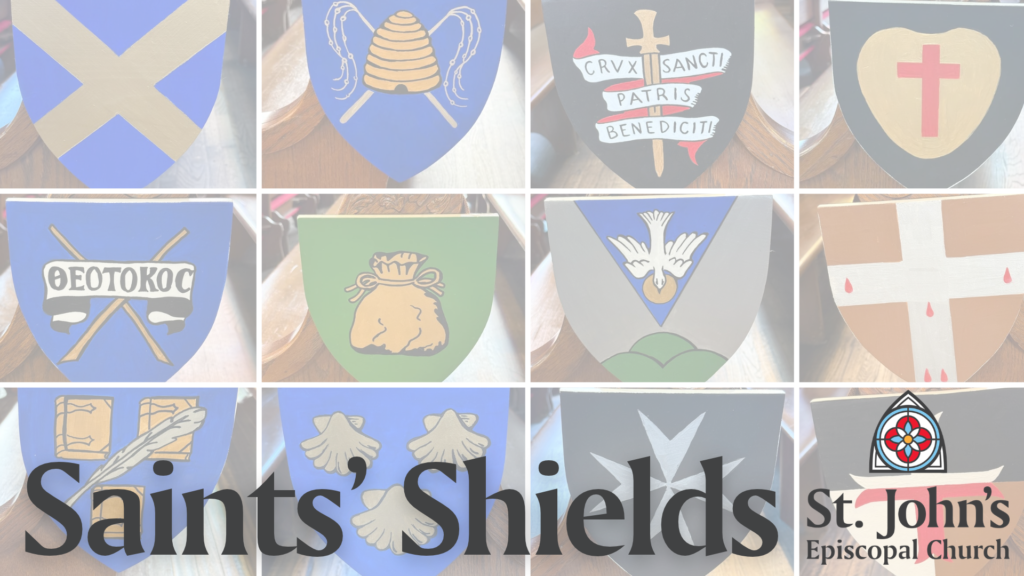
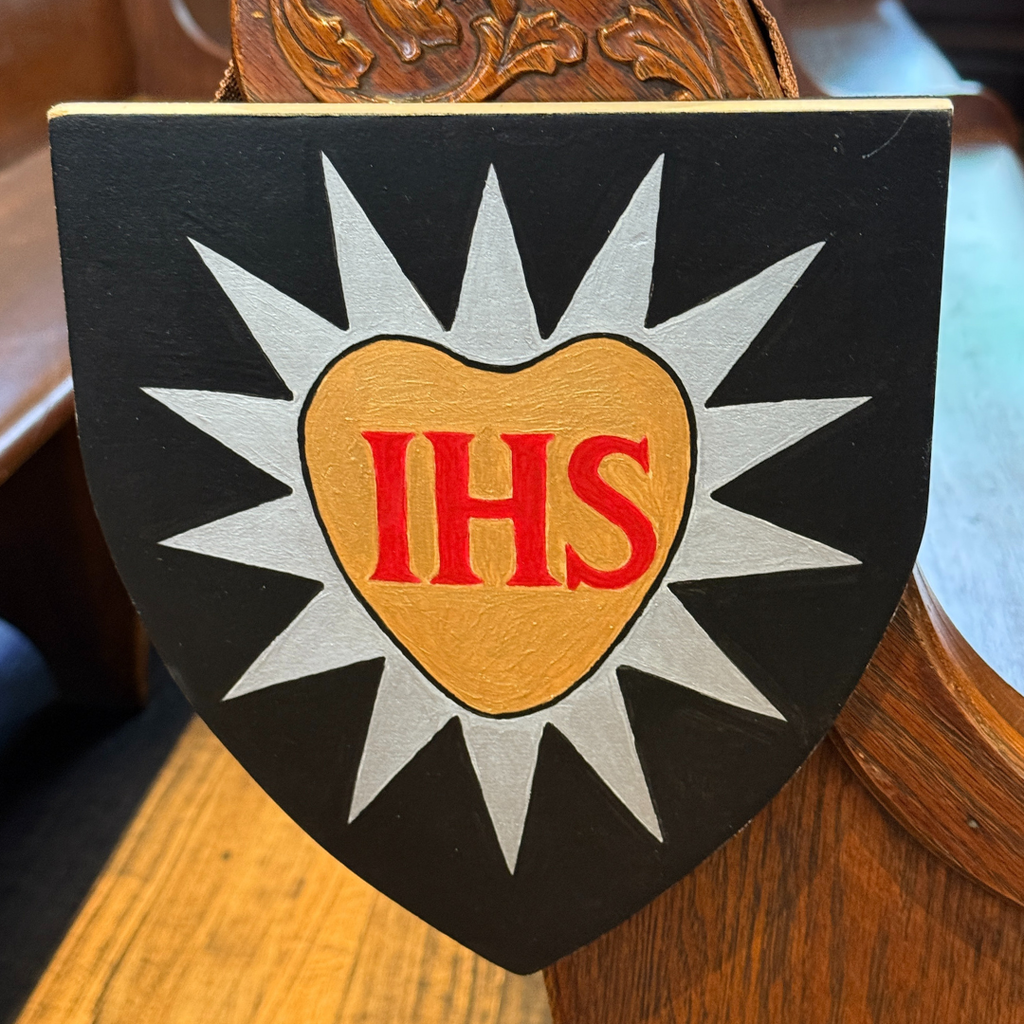
Centuries ago, artists of the Church began creating coats of arms for the saints — each one rich with the colors, symbols, and stories of faith.
St. John’s parishioners have continued that tradition, hand-painting these beautiful shields to honor holy men and women across the ages.
Each shield tells a story of courage, compassion, and devotion — reminders that the saints still surround us, inspiring us to live lives of faith and love.
The background colors themselves carry meaning: red often signifies the blood of martyrs and the fervor of apostles; blue evokes heavenly truth and divine contemplation; gold represents glory, virtue, and the light of Christ; silver (white) stands for purity and joy; green conveys hope and new life; black speaks of humility and mystery; and purple reflects penitence and royal devotion.
As we walk down the aisle to receive Communion on All Saints’ Day, with the saints’ shields surrounding us on every side, we are reminded that we do not walk alone. We are encompassed by that great cloud of witnesses—men and women who, in their own times and ways, bore the light of Christ into the world.
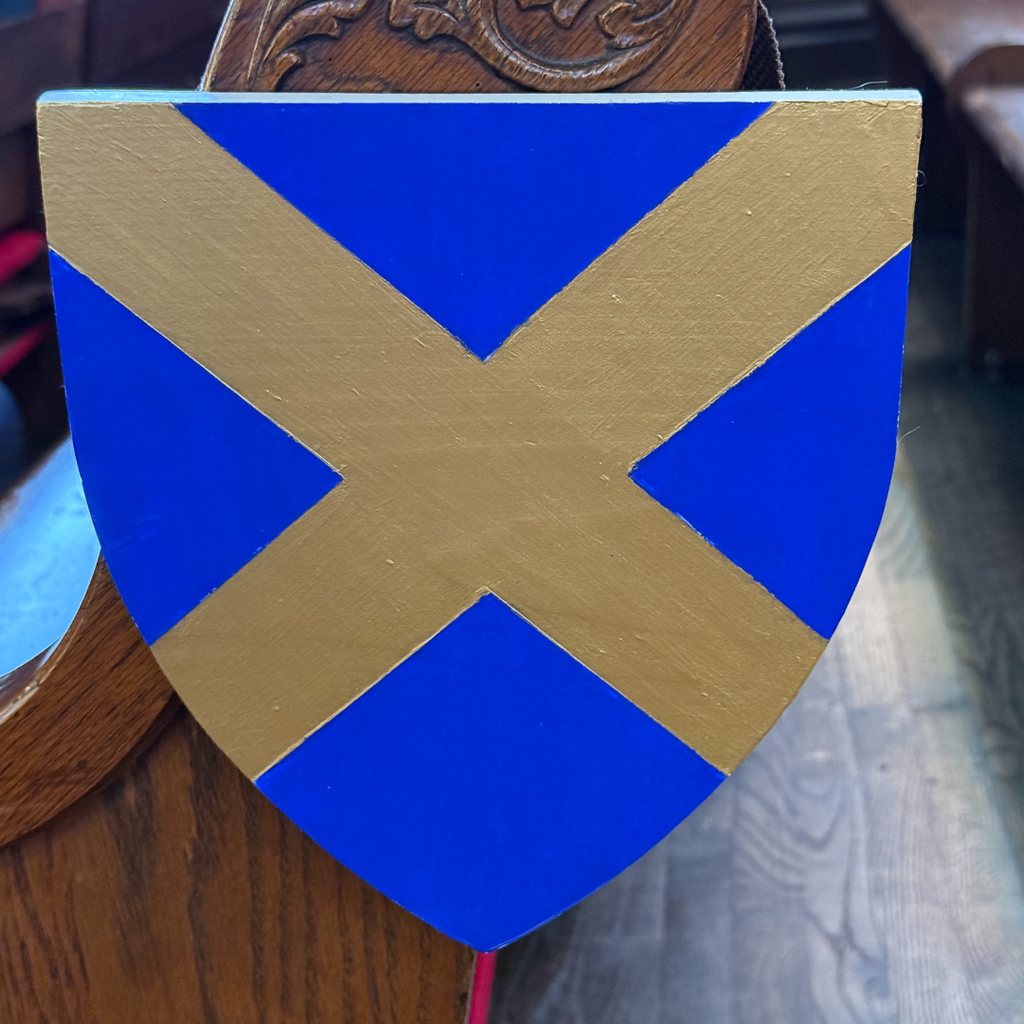
St. Alban – 4th century: The first British martyr (“Protomartyr Anglorum”) and the abbey at Hertfordshire dedicated in his honor bear the same arms. He is remembered for offering his own life in place of another, revealing the mercy of Christ in self-giving love. Gold saltire on a blue field. Celebrated June 22.
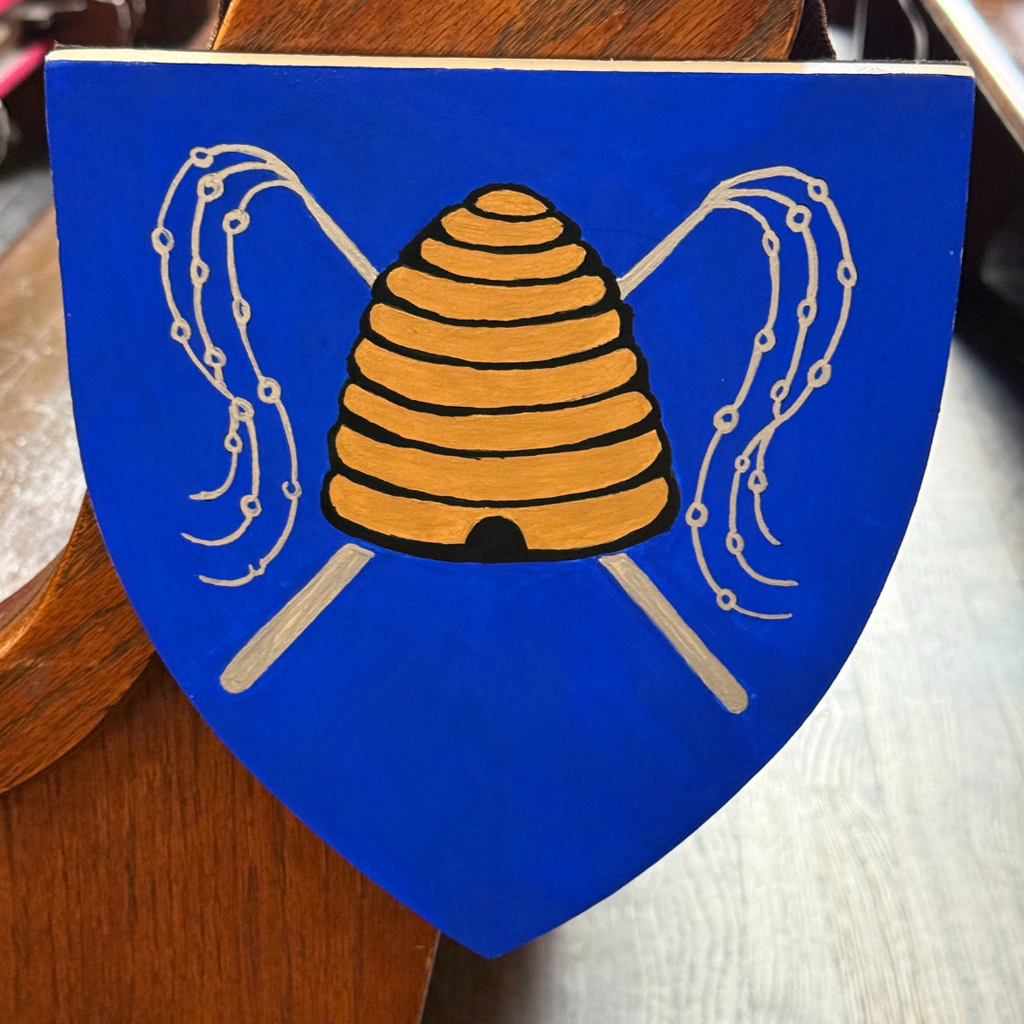
St. Ambrose – 4th century: The scourges represent the strict discipline of the Bishop of Milan. His eloquence, courage, and advocacy for justice shaped the moral and theological life of the early Church. Gold beehive, silver scourges on a blue field. Celebrated Dec. 7.
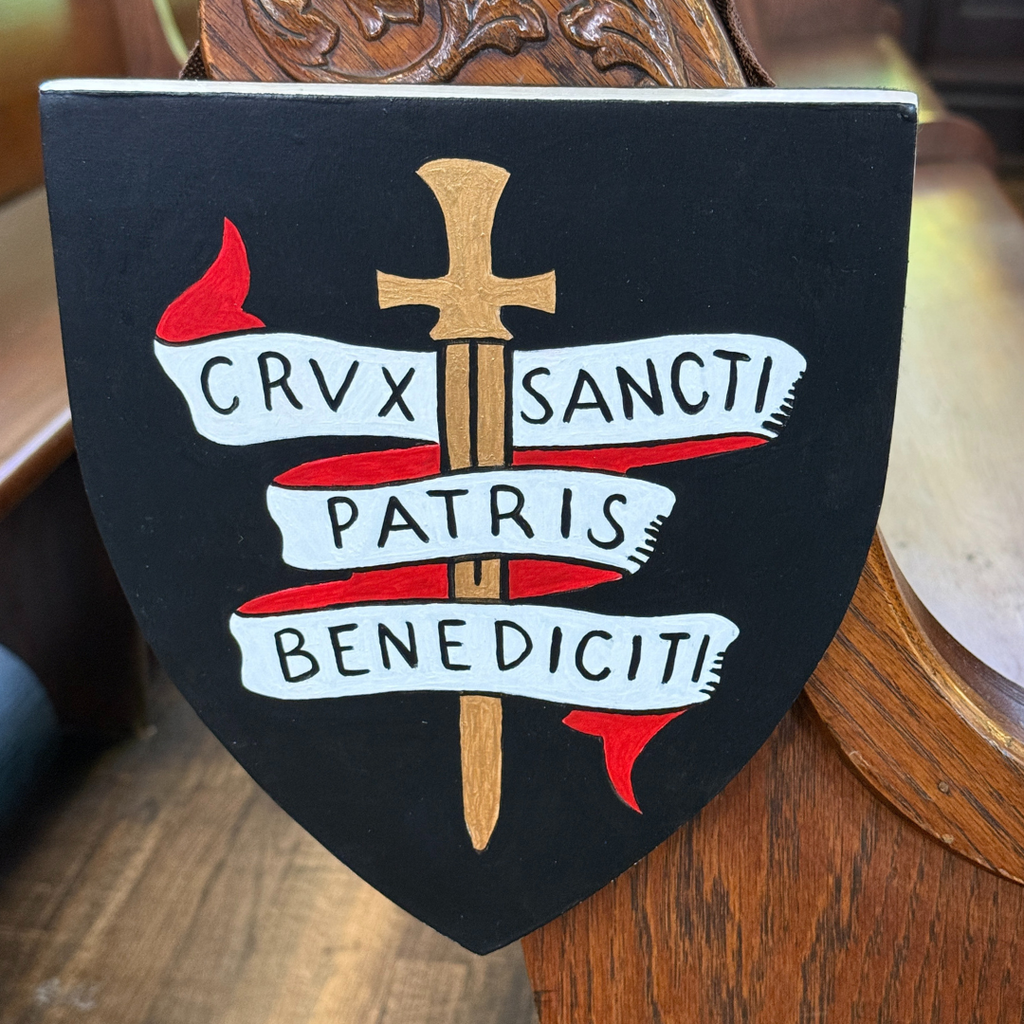
St. Benedict of Nursia – 6th century: The Father of Western Monasticism left to the monks of his order his famous Rule. His balance of prayer and work created a pattern of holiness that continues to guide Christian community. A gold sword with hilt forming a cross, white scroll tipped red, with red inscription “The cross of the holy father,” all on a black field. Celebrated July 11.
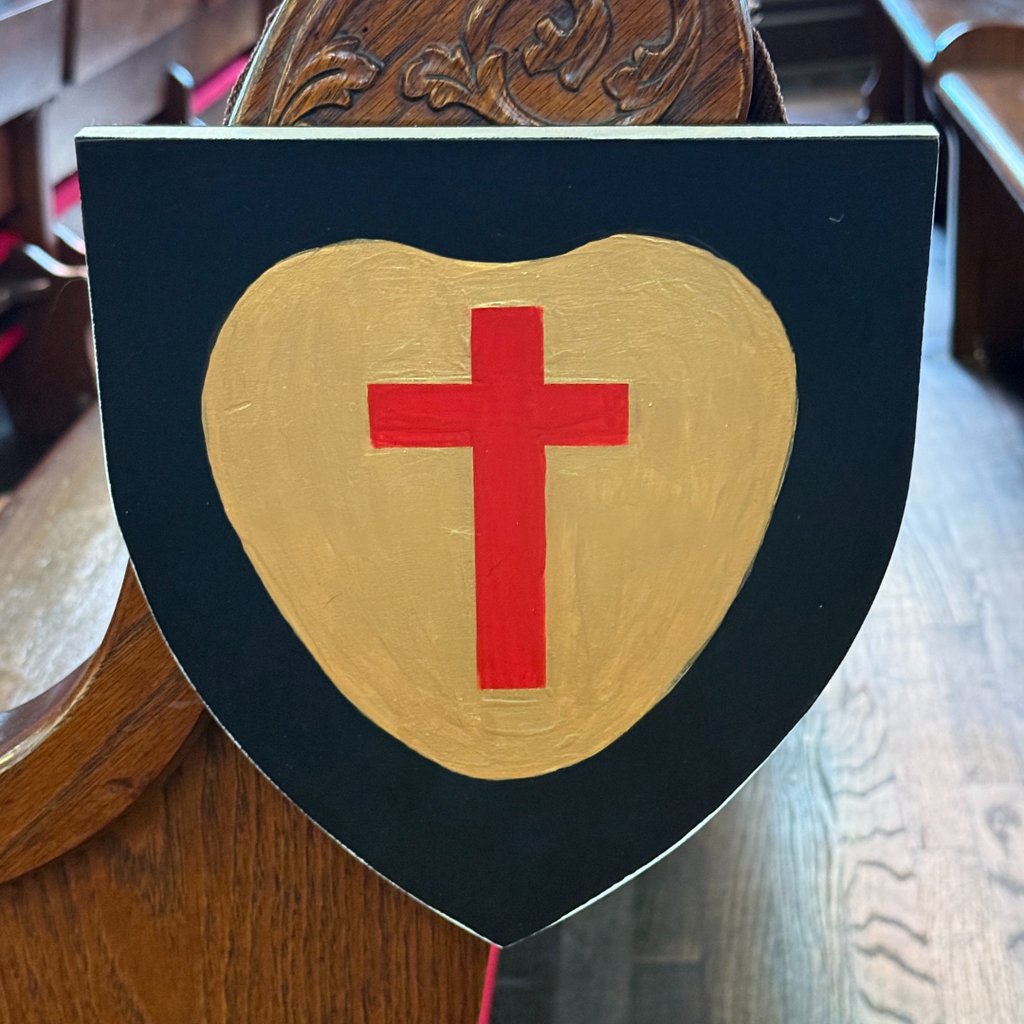
St. Catherine of Siena – 14th century: Among many diplomatic achievements, St. Catherine is known for effecting a reconciliation between Florence and the Papacy. Her intense love for Christ and vision of divine mercy inspired her reforming zeal. A red cross, gold heart, on a black field. Celebrated Apr. 29.
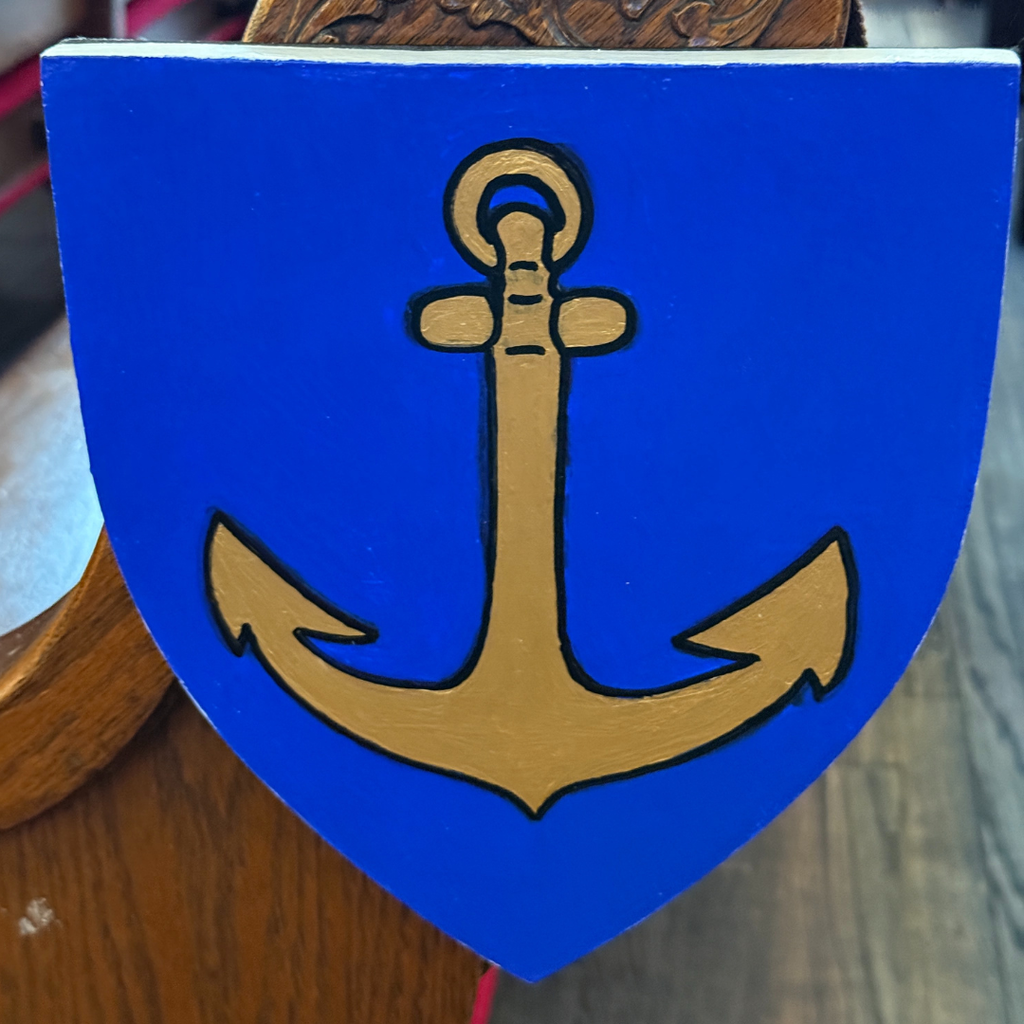
St. Clement – 1st century: Bishop of Rome, martyred by being cast into the sea with an anchor. His writings reveal a deep concern for unity and charity within the Body of Christ. A gold anchor on a blue field. Celebrated Nov. 23.
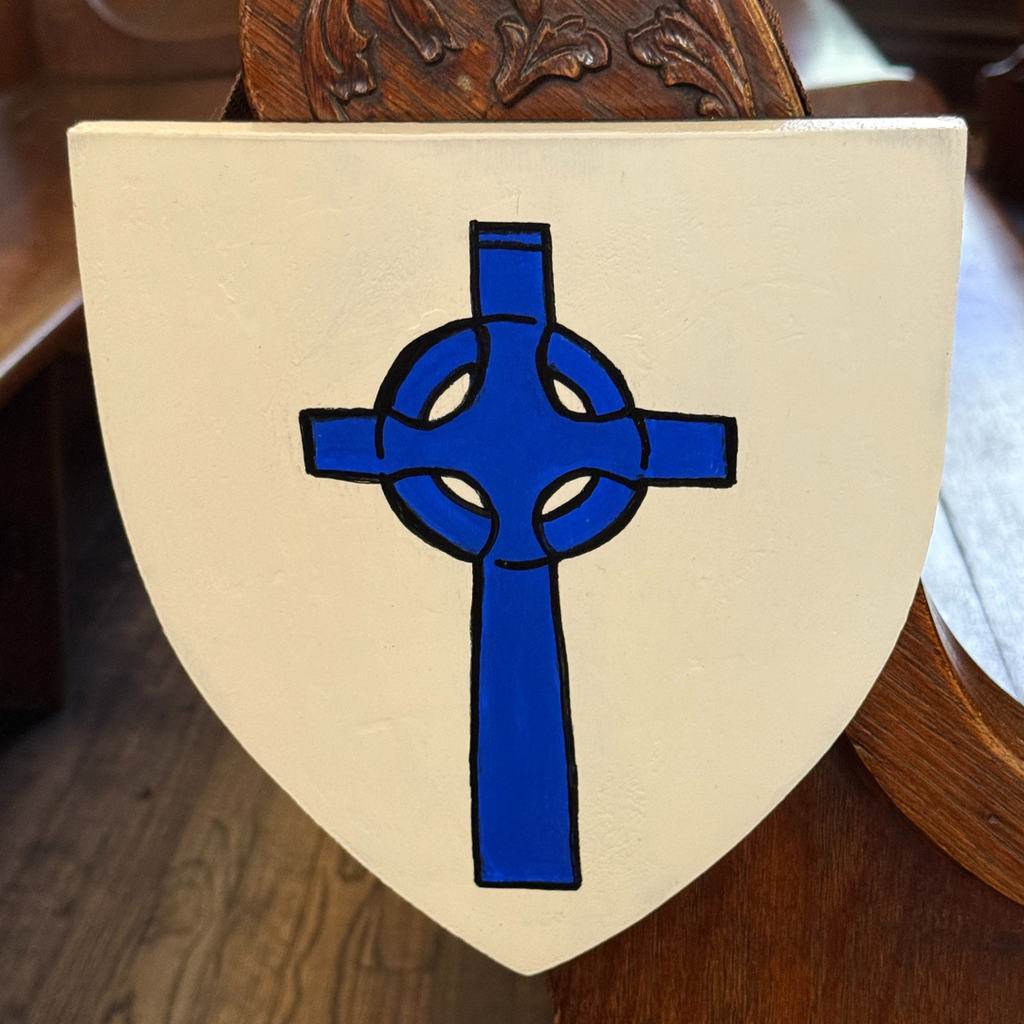
St. Columba – 6th century: Founder of the island sanctuary of Iona, who, with his monks, evangelized Scotland and northern England. Columba’s poetic spirit and prophetic heart brought the light of the Gospel to a rugged land. A blue Iona cross on a white field. Celebrated June 9.
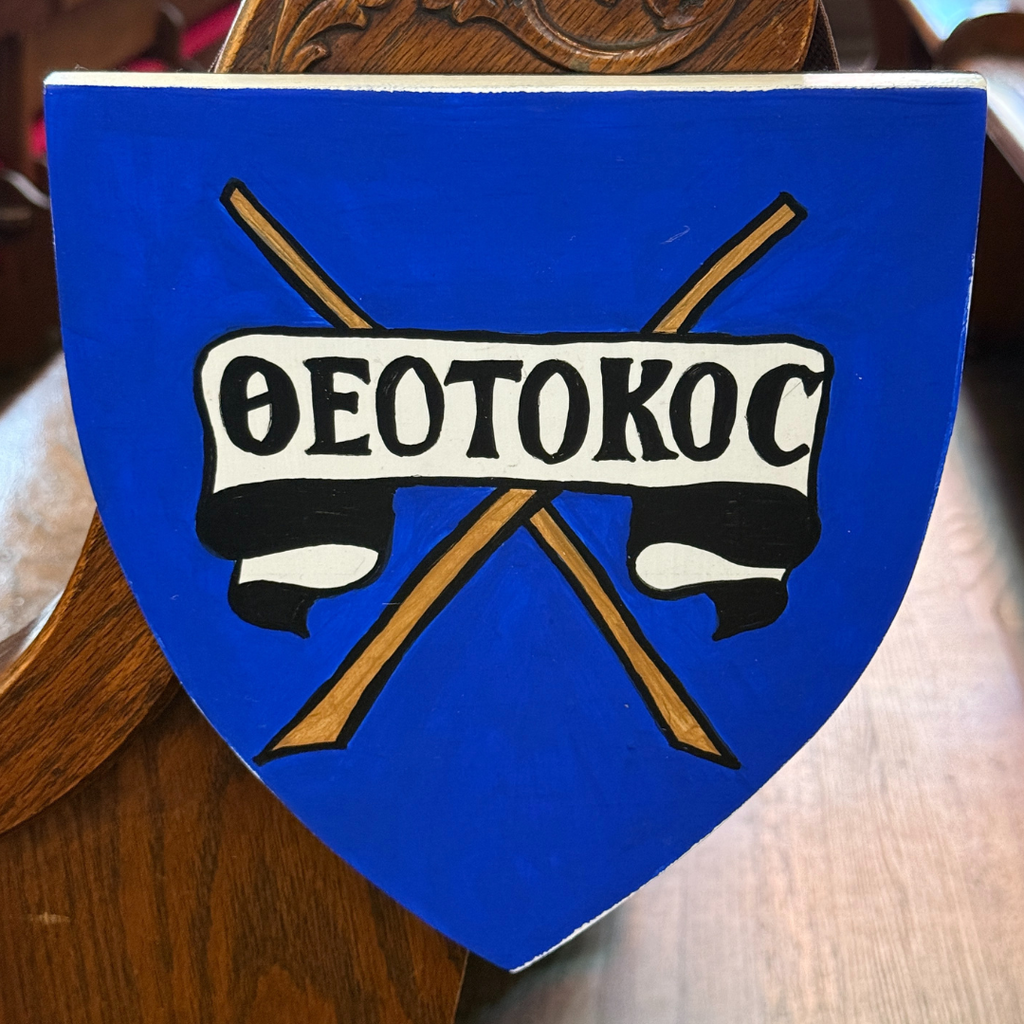
St. Cyril of Alexandria – 5th century: Defender of the Blessed Virgin as Mother of God against the false doctrine of Nestorius. His clarity and conviction shaped the Church’s understanding of Christ’s full divinity and humanity. Gold pens, white scroll with black inscription, on a blue field. Celebrated June 27.
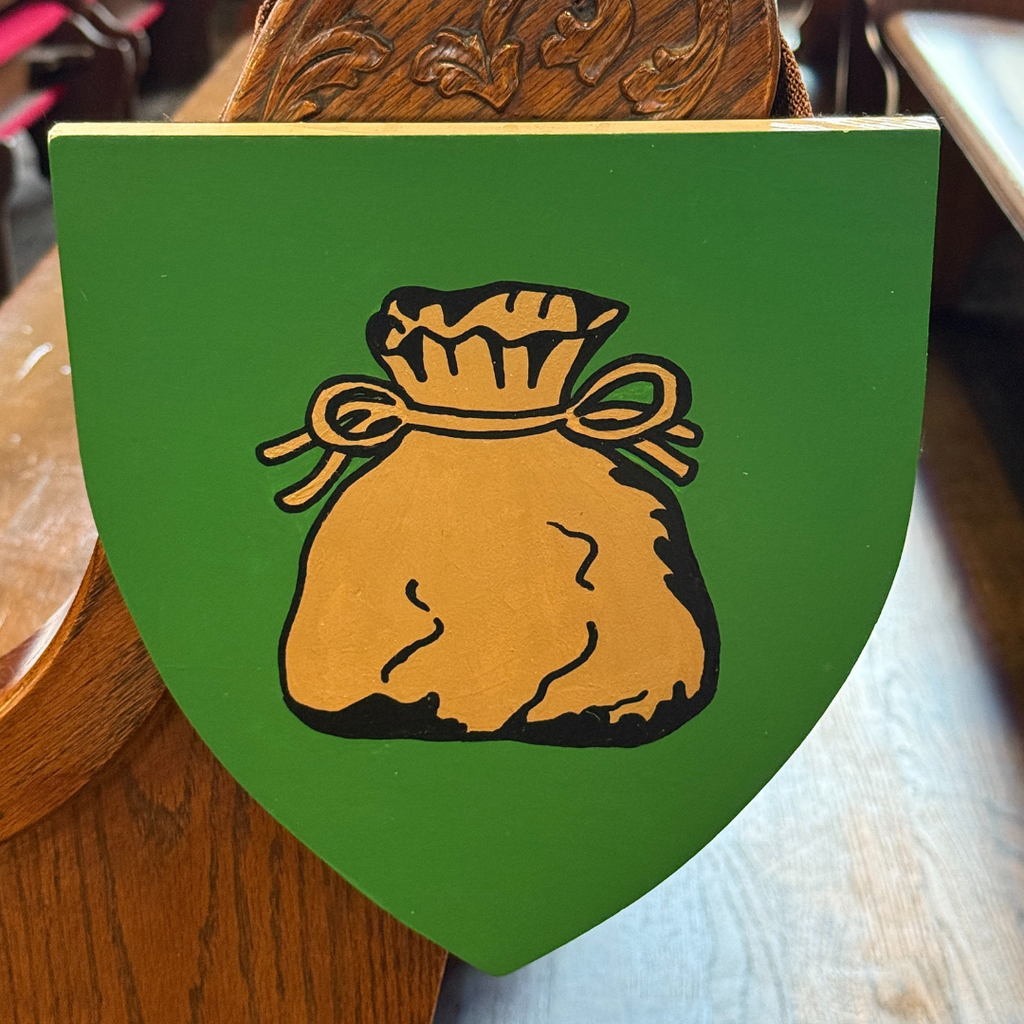
St. Cyril of Jerusalem – 4th century: Bishop and teacher who triumphed over Arian heresy. His catechetical writings continue to teach the faith of baptism and the Eucharist. Gold moneybag on a green field. Celebrated Mar. 18.
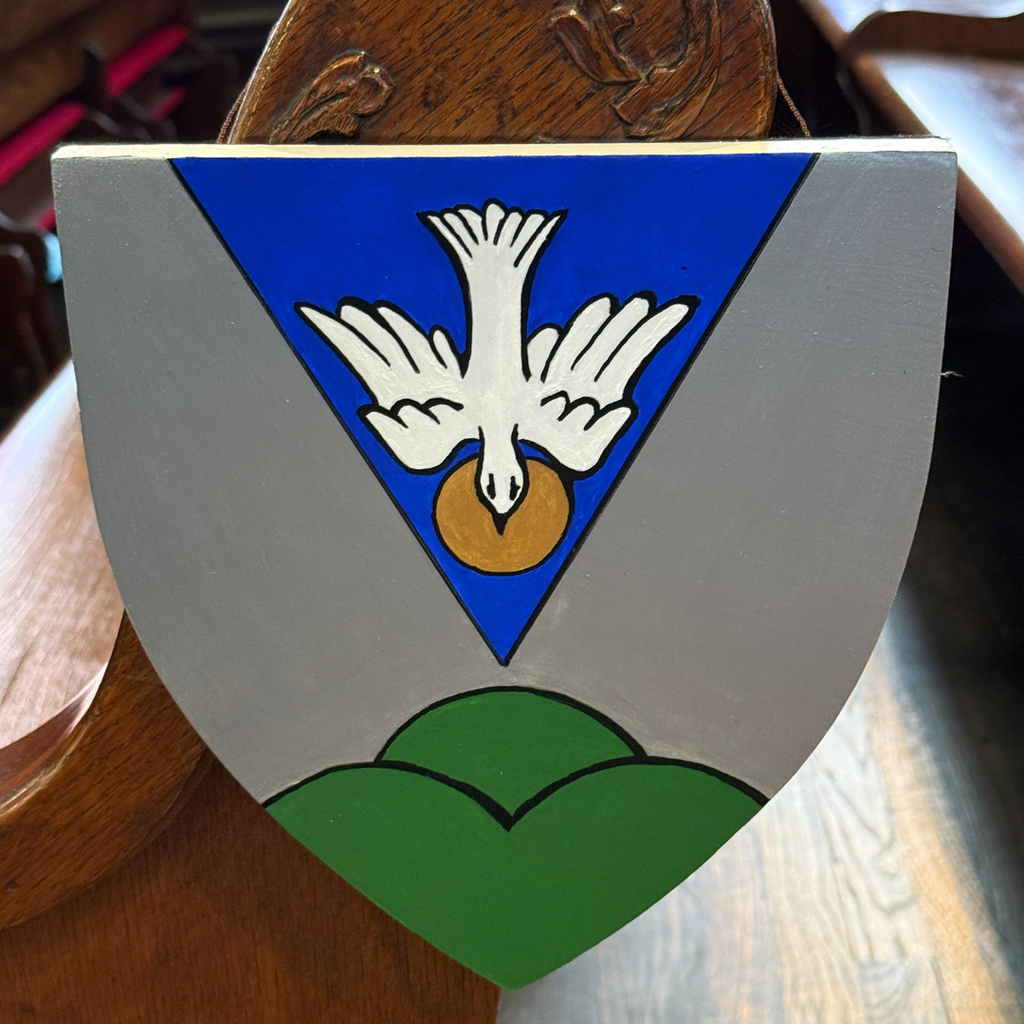
St. David of Wales – 6th century: The patron saint of Wales, remembered for his holiness and eloquence in preaching. His simple rule of life—prayer, study, and service—embodies the Gospel lived humbly. A white dove with gold nimbus, blue pile, green mount, all on a silver field. Celebrated Mar. 1.
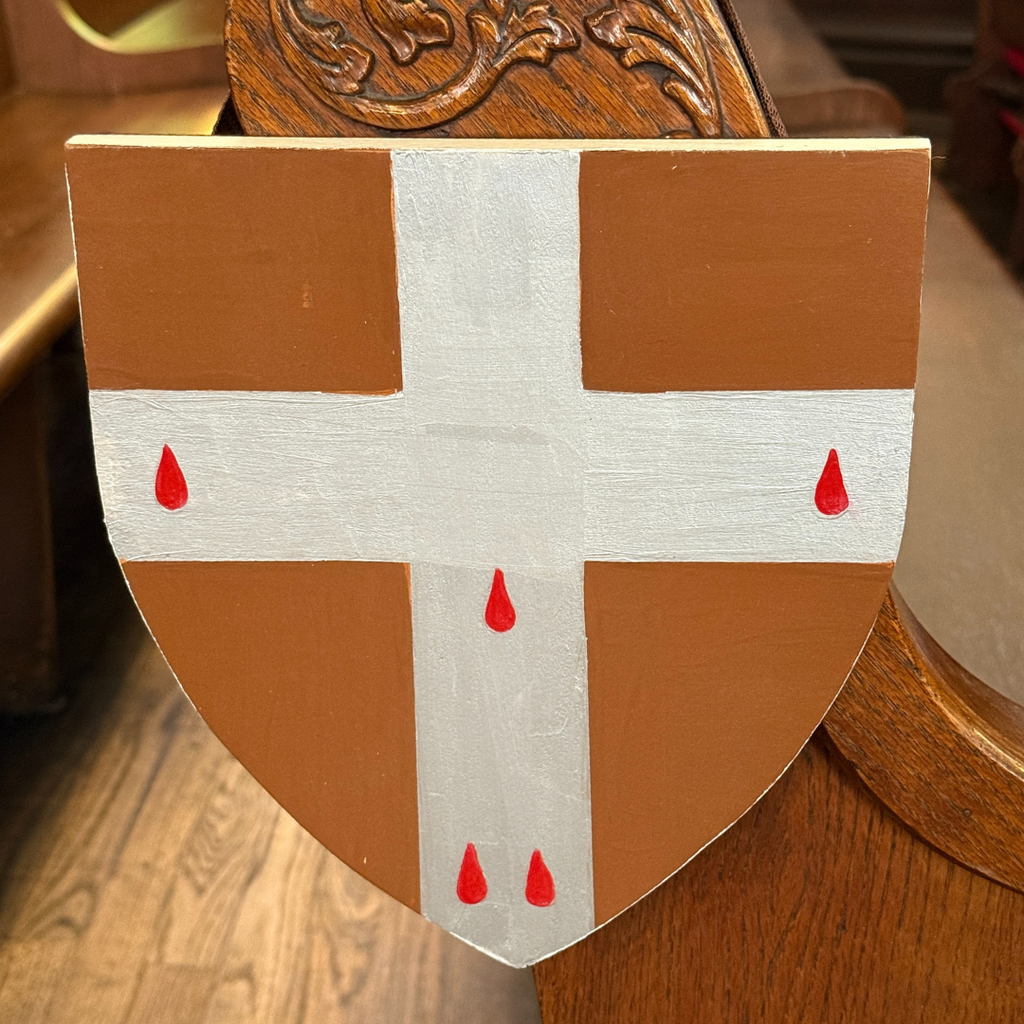
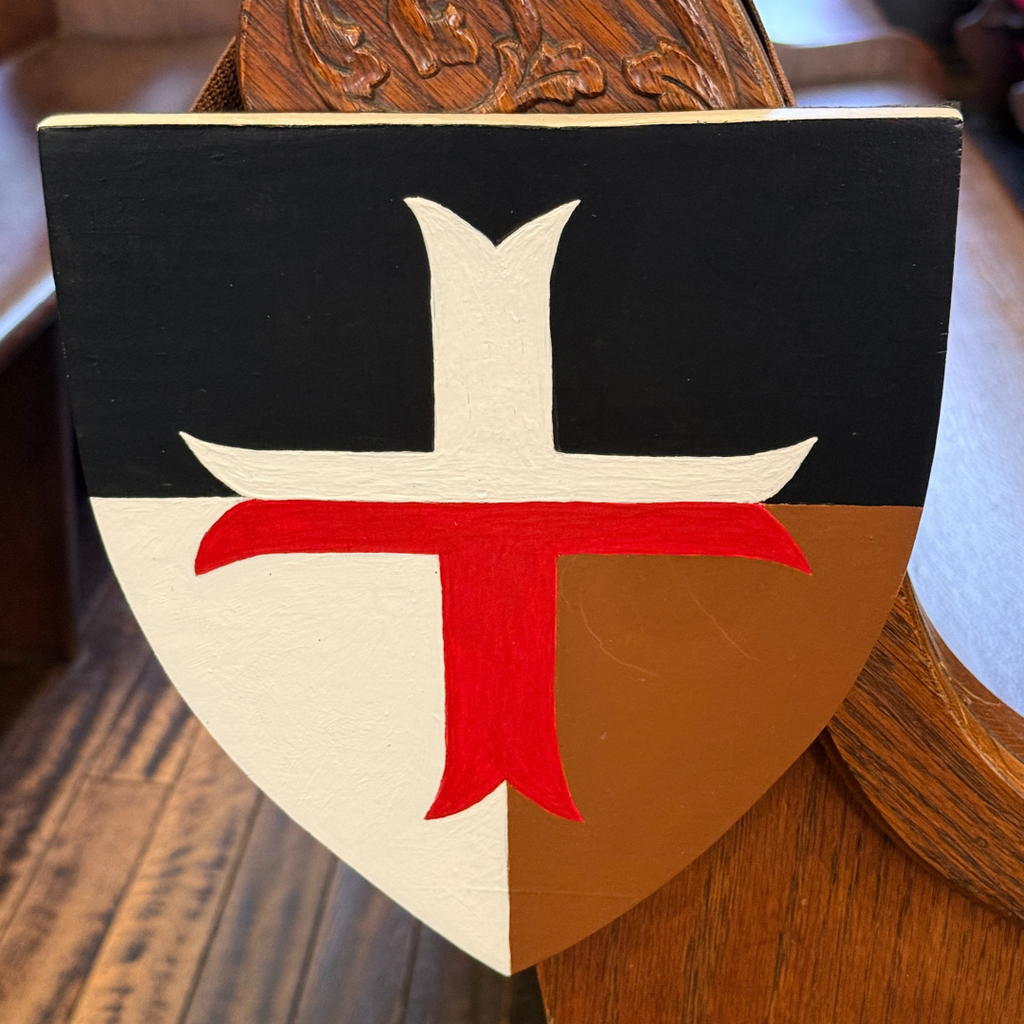
St. Francis of Assisi – 13th century: It is said that St. Francis, the father of the Franciscan Order, for two years before his death bore the marks of the Lord’s Passion upon his hands, feet, and side. His joyful poverty and kinship with all creation continue to call the Church to simplicity and praise. A silver cross, red marks of the stigmata, on a brown field. Celebrated Oct. 4.
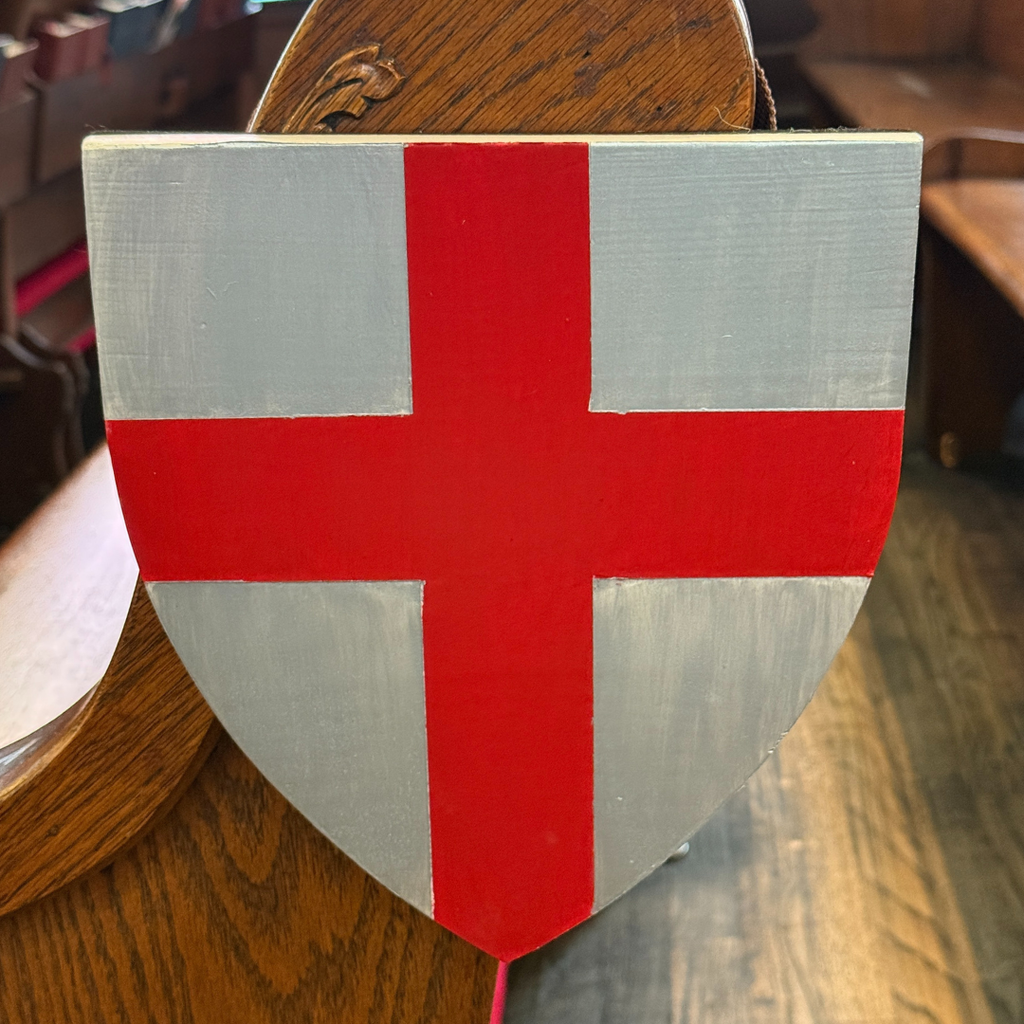
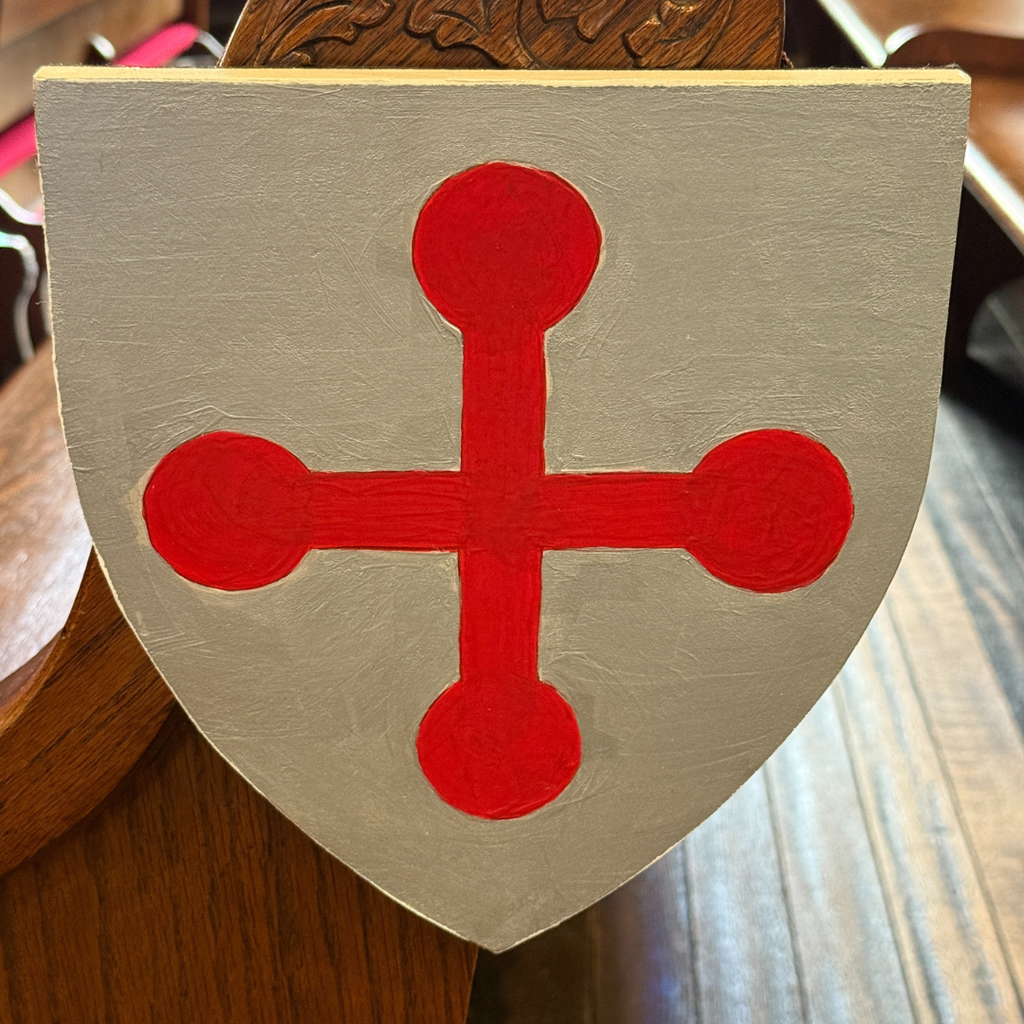
St. George – 3rd century: The patron of England, a Christian warrior who is said to have suffered martyrdom in Palestine during the Diocletian persecution. His courage became a symbol of steadfast faith against evil and oppression. A red cross on a silver field. Celebrated Apr. 23.
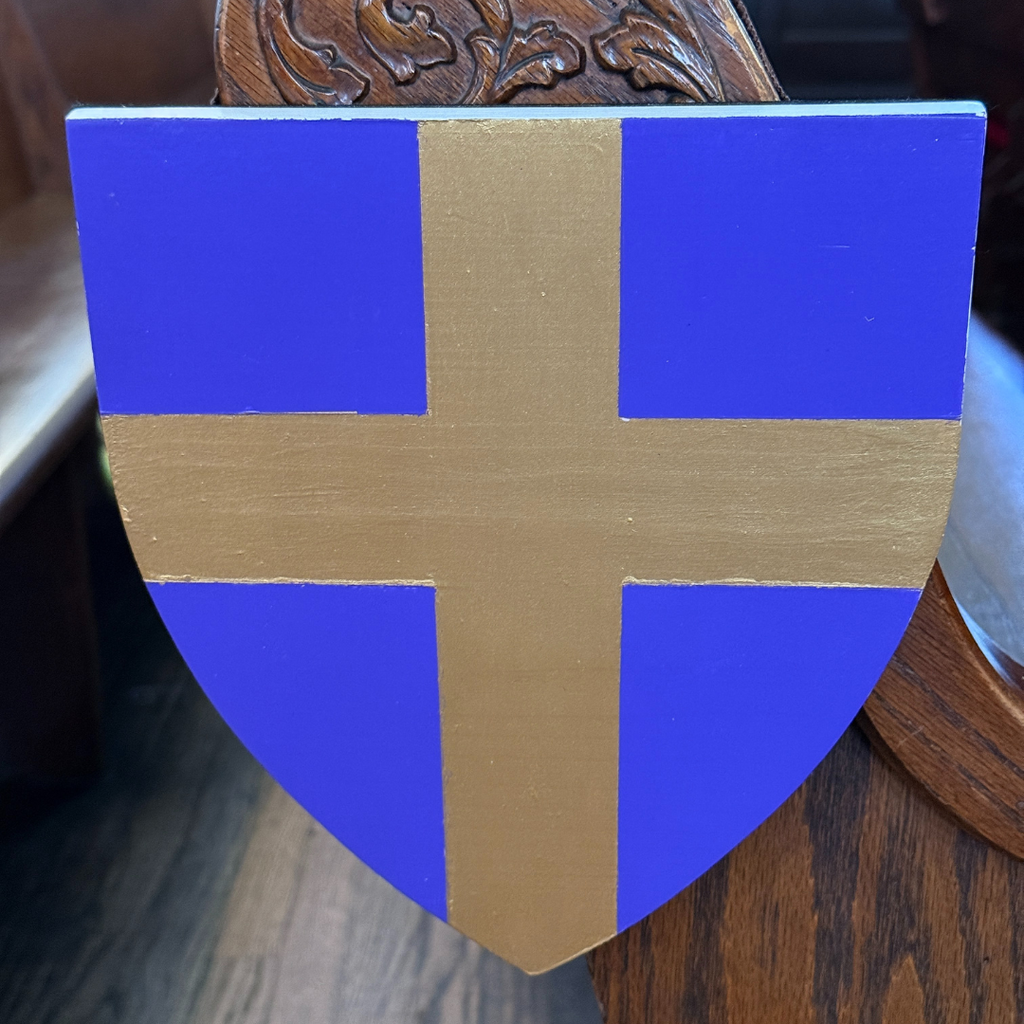
St. Helena – 4th century: The mother of Emperor Constantine, honored for her devotion in seeking the True Cross. Her faith reminds us that holiness often takes the form of patient, faithful perseverance. A gold cross on a purple field. Celebrated Aug. 22.
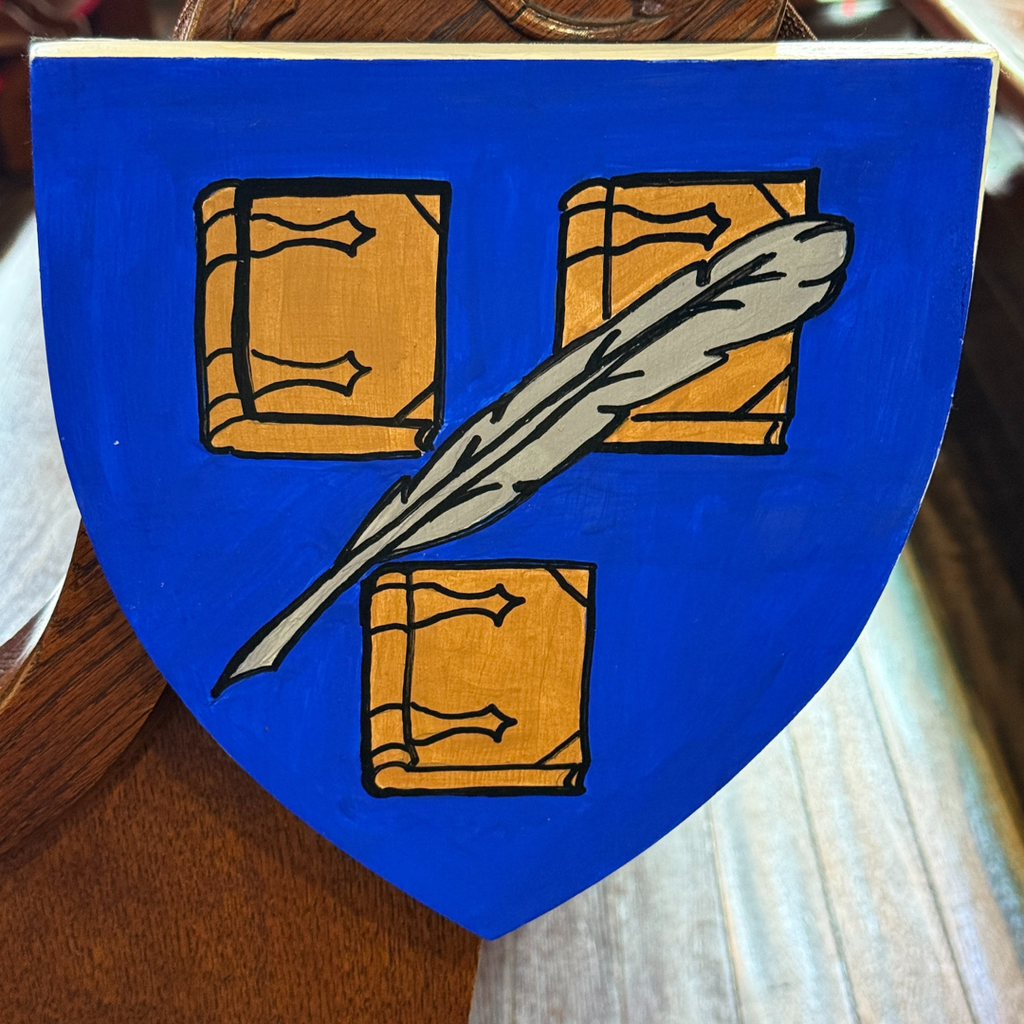
St. Hilary of Poitiers – 4th century: One of the great doctors of the Church, teacher of St. Martin, and defender of the Orthodox faith against Arianism. His courage in controversy exemplifies the union of intellect and charity. A silver pen with three gold books, on a blue field. Celebrated Jan. 13.
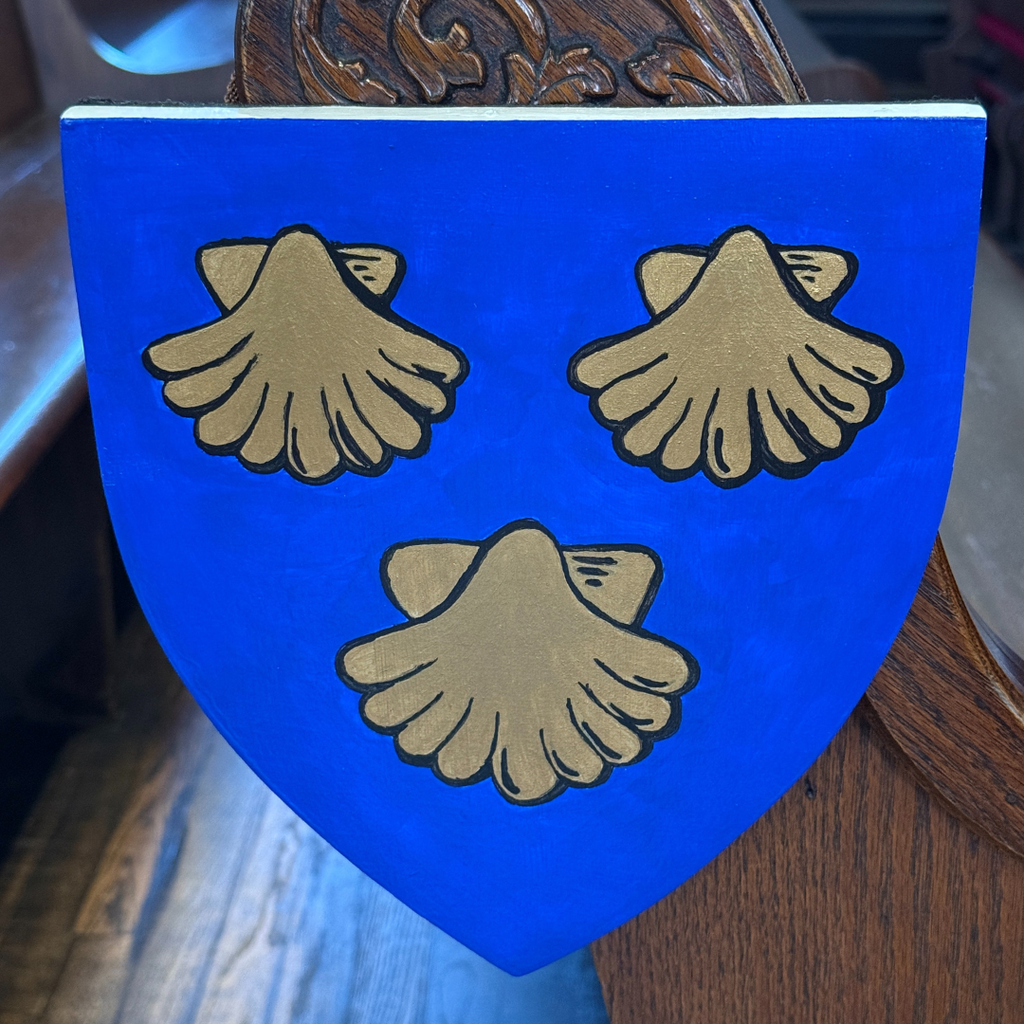
St. James the Greater – 1st century: The patron of Spain and of pilgrims, mentioned as the first disciple to go forth in mission. His journeying faith made him a symbol of perseverance in following Christ’s call. Three gold shells on a blue field. Celebrated July 25.
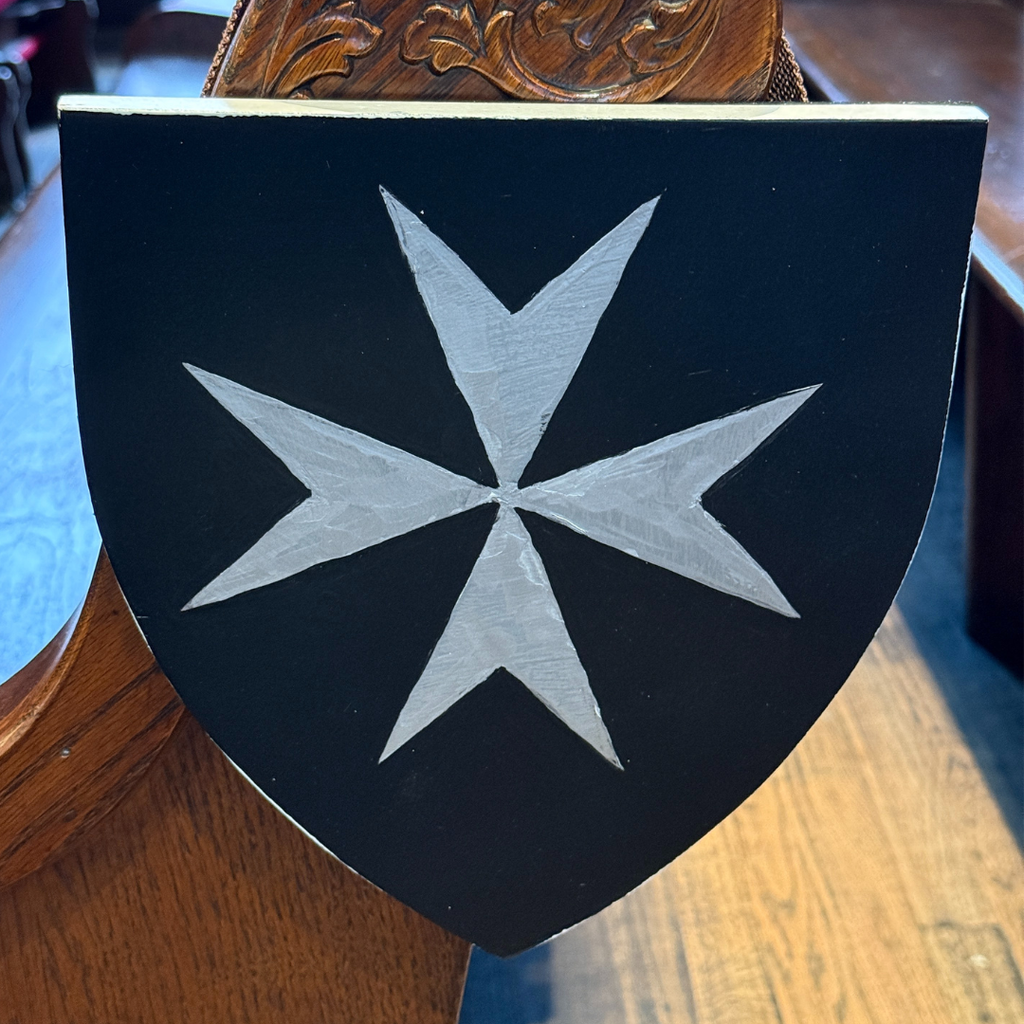
St. John Baptist – 1st century: The last of the Jewish prophets, who prepared the way for Jesus. His humility and fiery proclamation remind us that repentance opens the heart to grace. The Maltese cross of silver, on a black field. Celebrated June 24.
St. John of the Cross – 16th century: A Spanish Carmelite friar, mystic, and reformer who joined St. Teresa of Avila in renewing the Carmelite Order. His writings on the “dark night of the soul” reveal that even in desolation, God draws the soul into deeper union and love. The divided cross and field symbolize purity of faith and perseverance under trial. Celebrated Dec. 14.
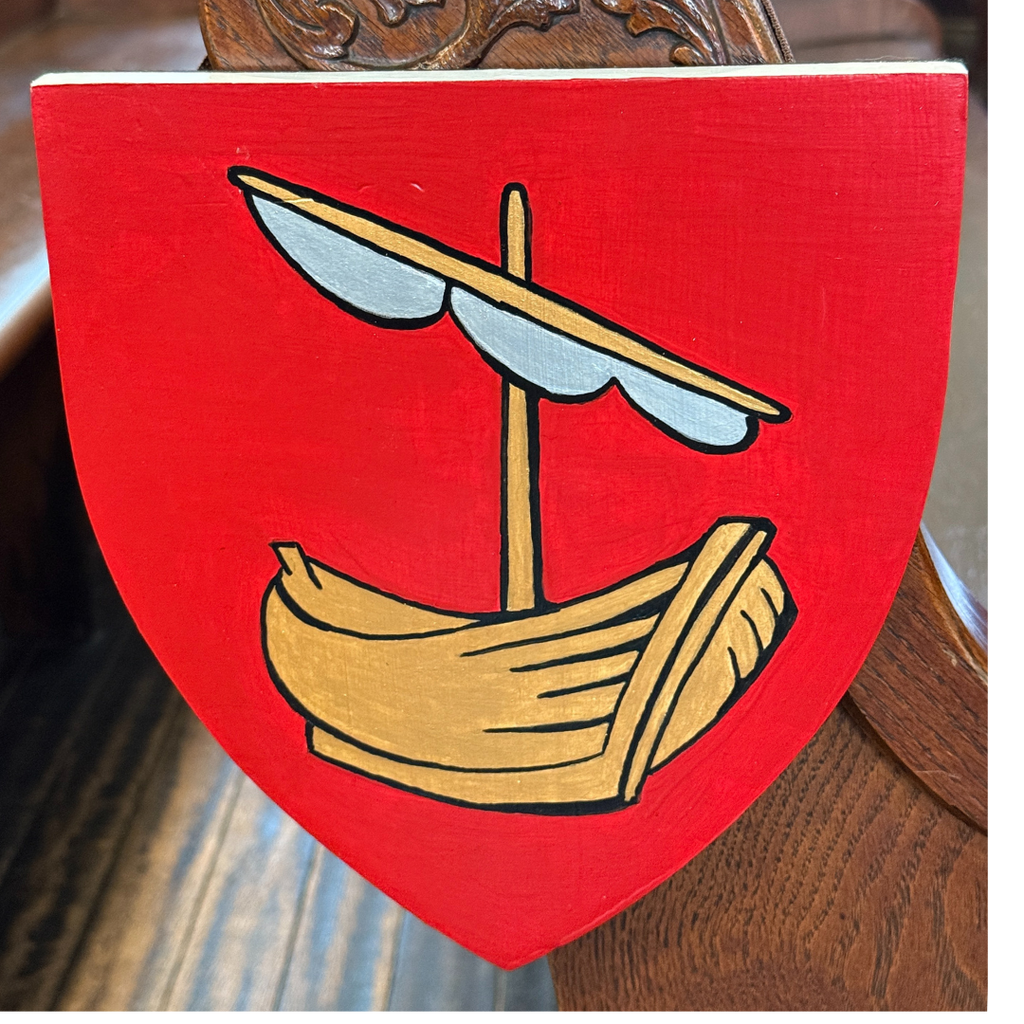
St. Jude – 1st century: Also known as Thaddeus or Lebbaeus, he carried the faith to many lands as a missionary. His symbol of a ship reminds us that the Church moves through all seas by the wind of the Spirit. A gold ship with silver sails, on a red field. Celebrated Oct. 28 (shared with St. Simon).
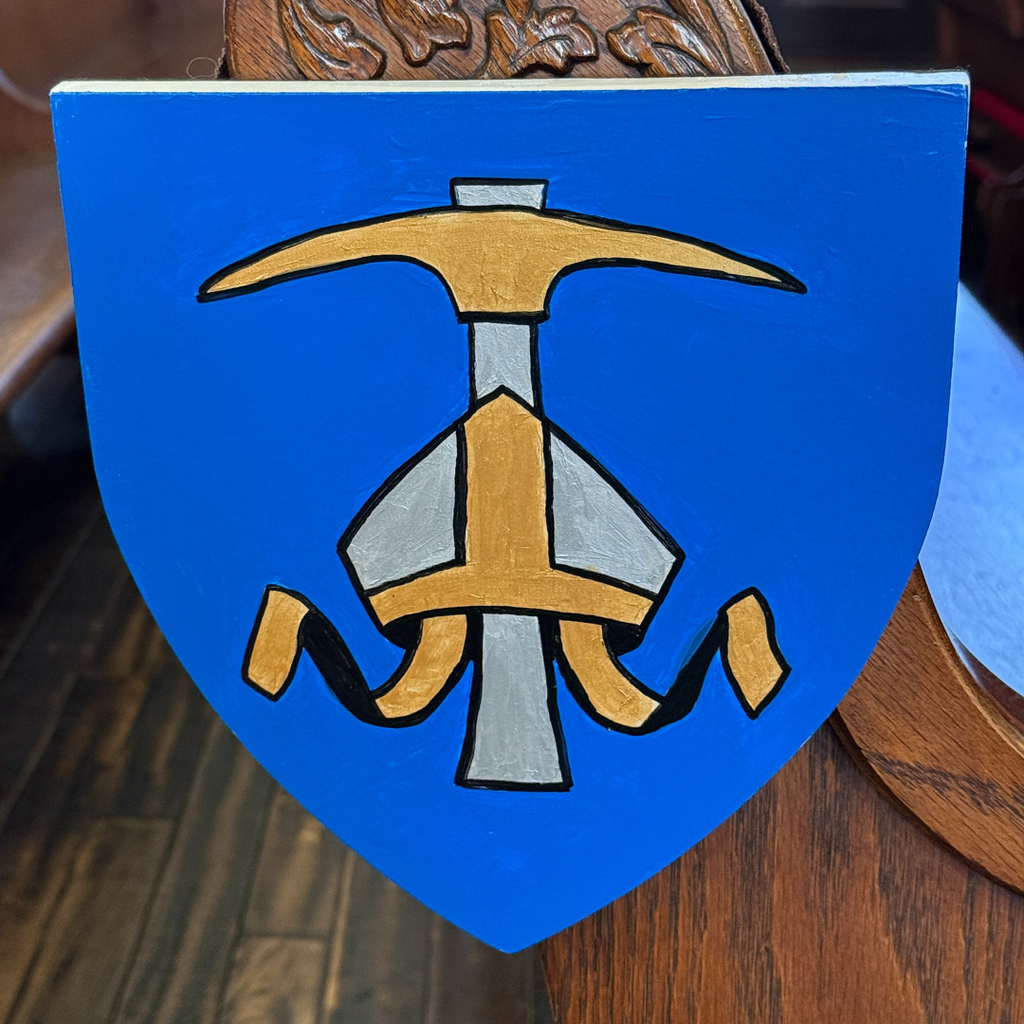
St. Leo of Rome – 5th century: Pope and teacher whose strength of spirit defended both the faith and the city of Rome. His sermons on the Incarnation still anchor the Church’s understanding of Christ’s saving work. A silver mitre with gold infulae, pickaxe with gold head and silver handle, on a blue field. Celebrated Nov. 10.
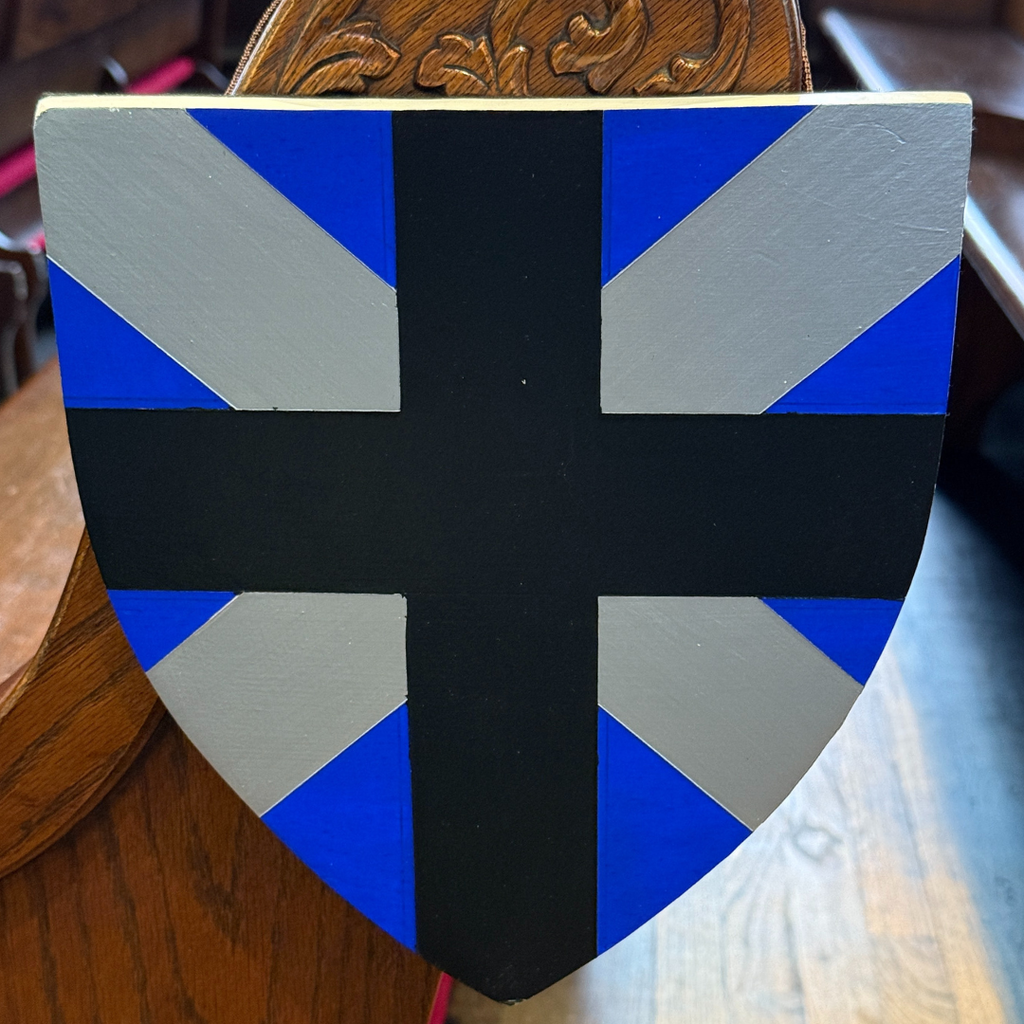
St. Margaret of Scotland – 11th century: Queen and reformer who brought learning, prayer, and mercy to her realm. Her piety and justice shaped a nation in the pattern of Christ’s compassion. A black Greek cross and silver saltire, on a blue field. Celebrated Nov. 16.
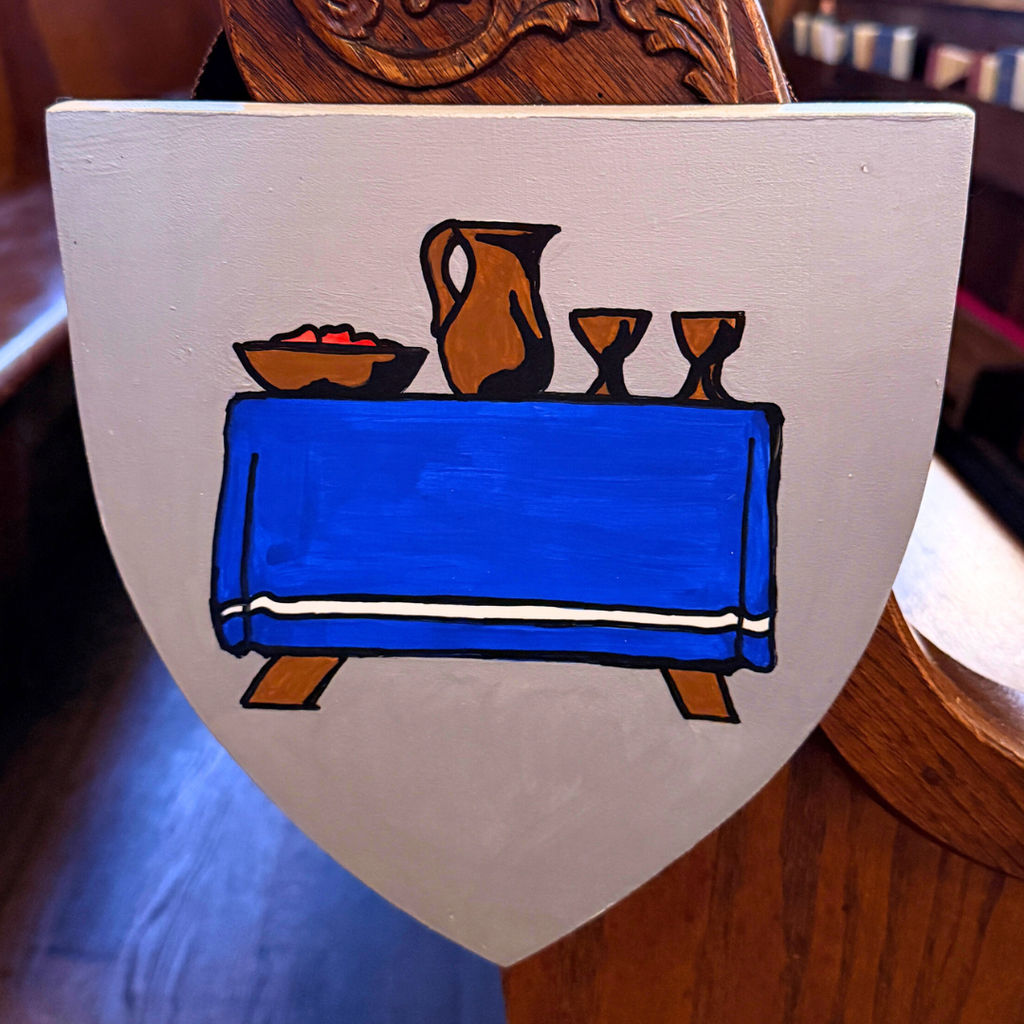
St. Martha – 1st century: Remembered for her hospitality to Jesus in Bethany. She reminds us that service, when offered in faith, is itself a form of worship. A covered table with blue cloth and red fruit, all on a silver field. Celebrated July 29.
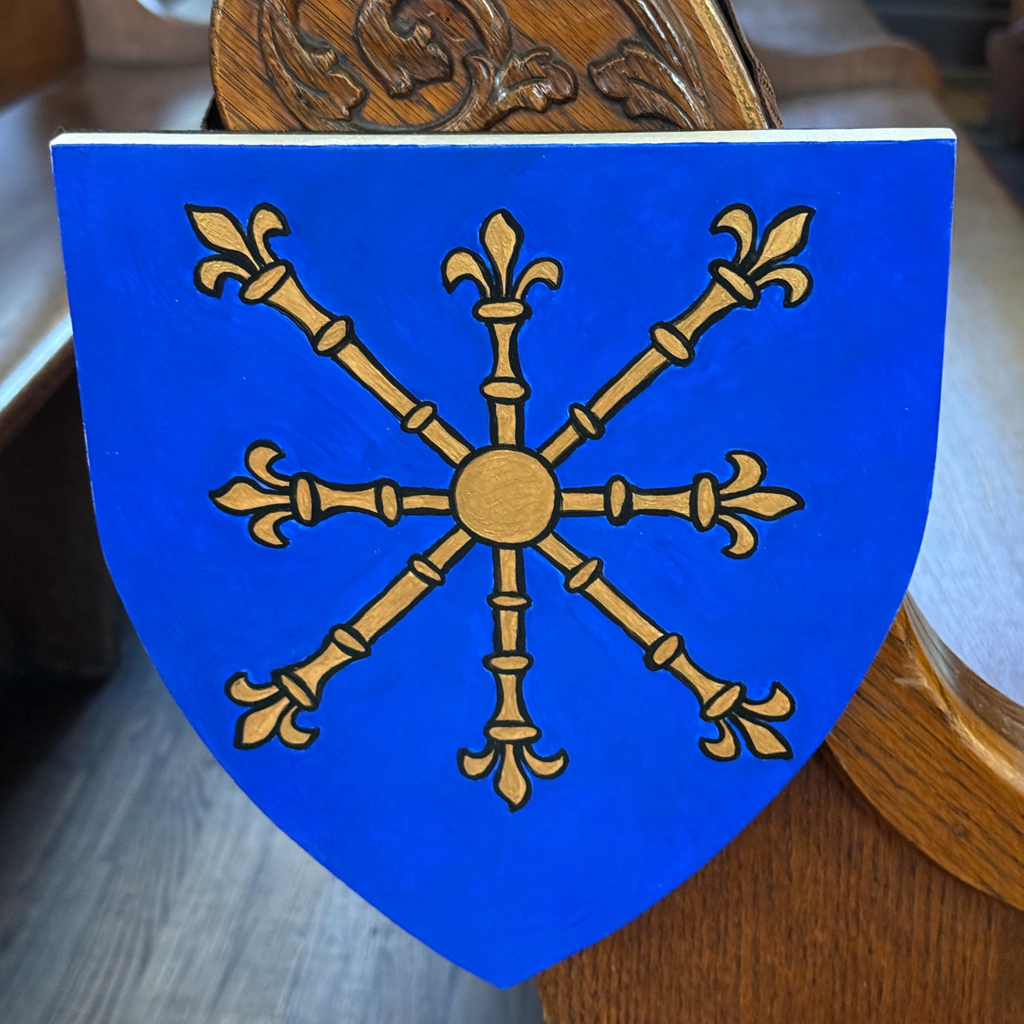
St. Martin of Tours – 5th century: Bishop of Tours, known for his charity and pastoral care. His act of sharing his cloak with a beggar revealed Christ’s presence in mercy. A gold escarbuncle on a blue field. Celebrated Nov. 11.
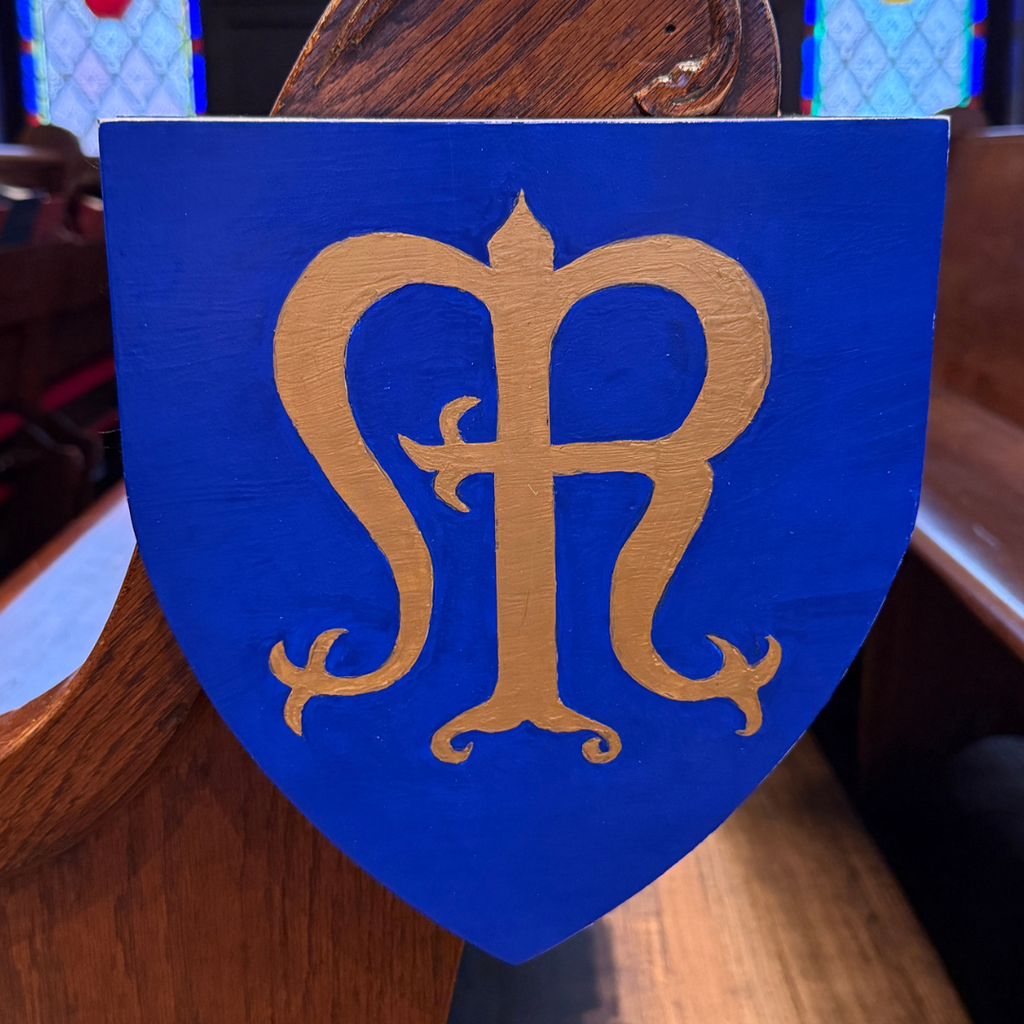
St. Mary the Virgin – 1st century: The mother of Jesus and model of joyful obedience. Her “yes” to God opened the way for the world’s salvation and continues to inspire every heart that longs for grace. Gold monogram on a blue field. Celebrated Aug. 15.
St. Michael the Archangel – Eternal: Leader of the heavenly hosts and guardian of souls. His victory over the powers of darkness reminds the Church of God’s promise to protect and redeem. A red cross on a silver field. Celebrated Sept. 29.
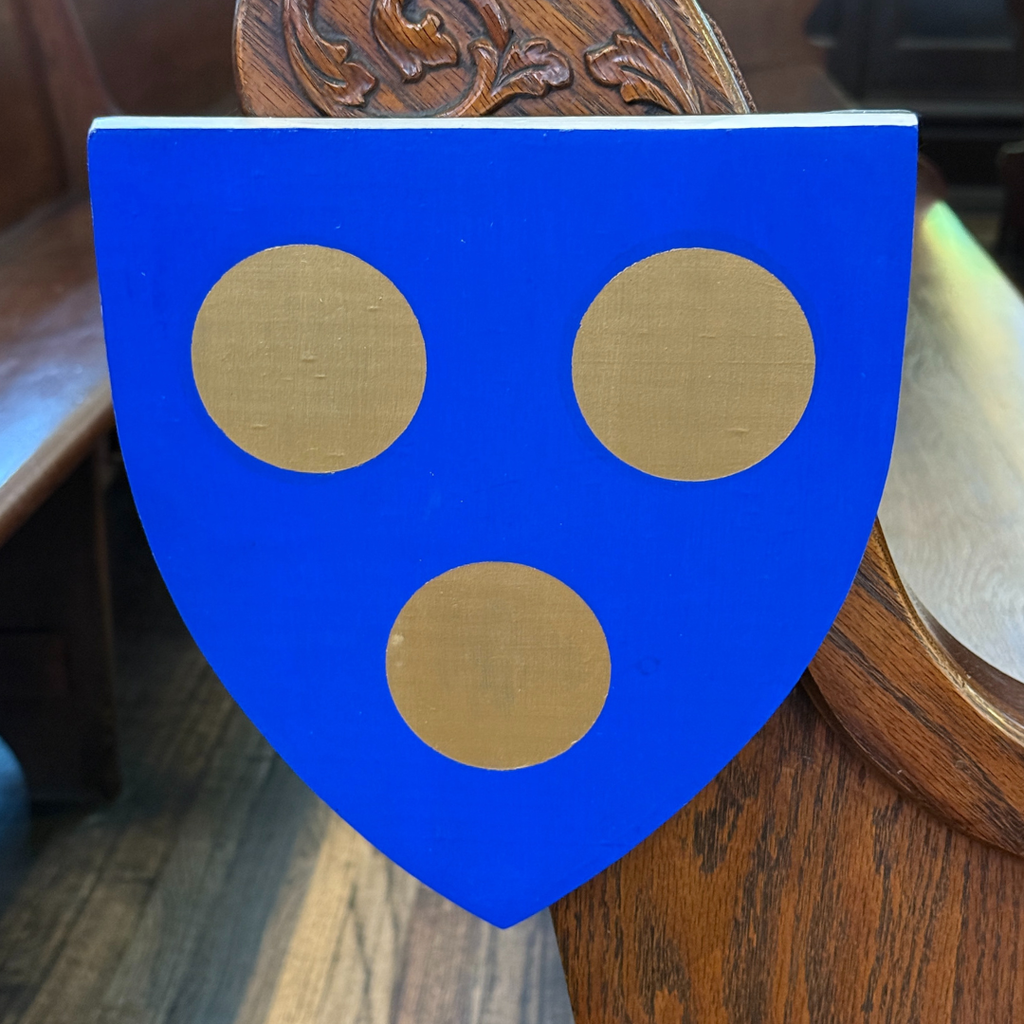
St. Nicholas of Myra – 4th century: Bishop and protector of children, remembered for his secret acts of charity. His generosity embodied the hidden kindness of Christ. Three gold roundels on a blue field. Celebrated Dec. 6.
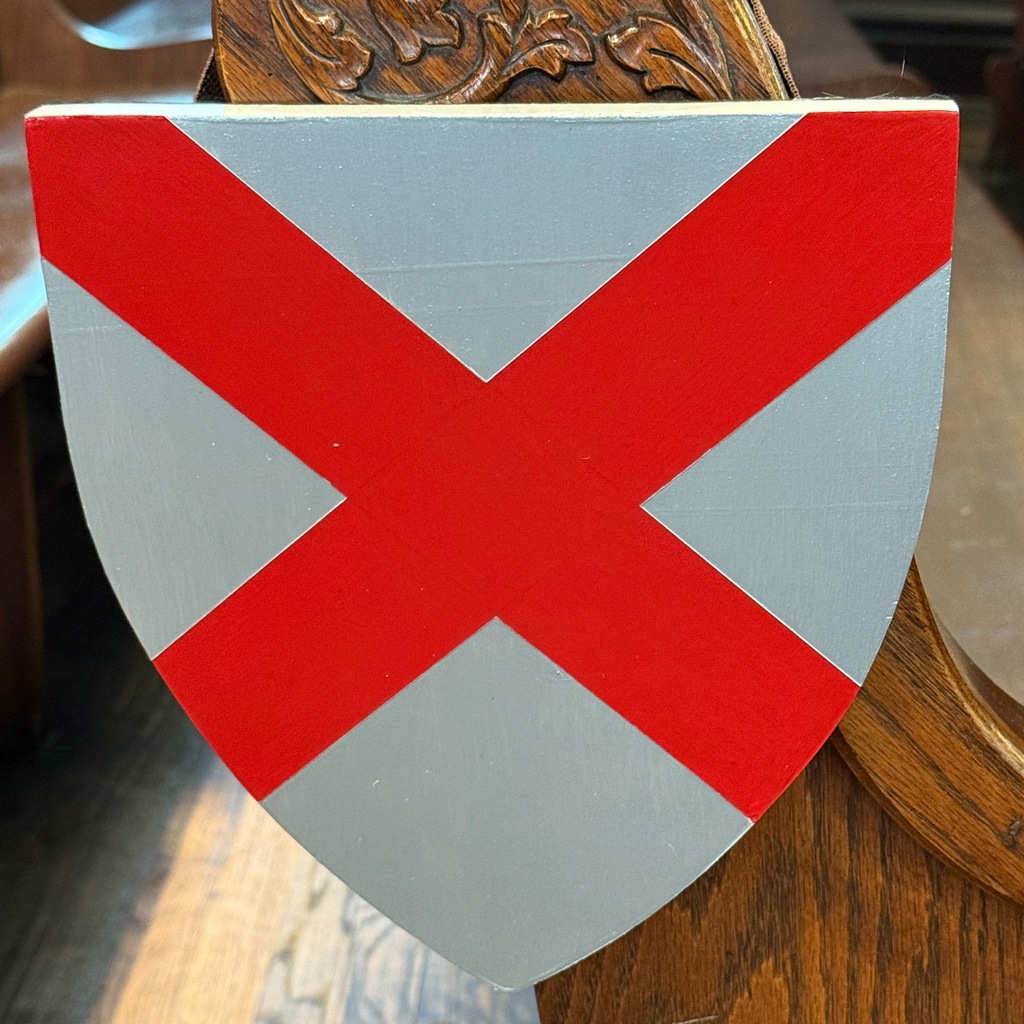
St. Patrick of Ireland – 5th century: Apostle of Ireland who returned to the land of his captivity to proclaim the Gospel. His courage and humility brought an entire people to faith. A red saltire on a silver field. Celebrated Mar. 17.
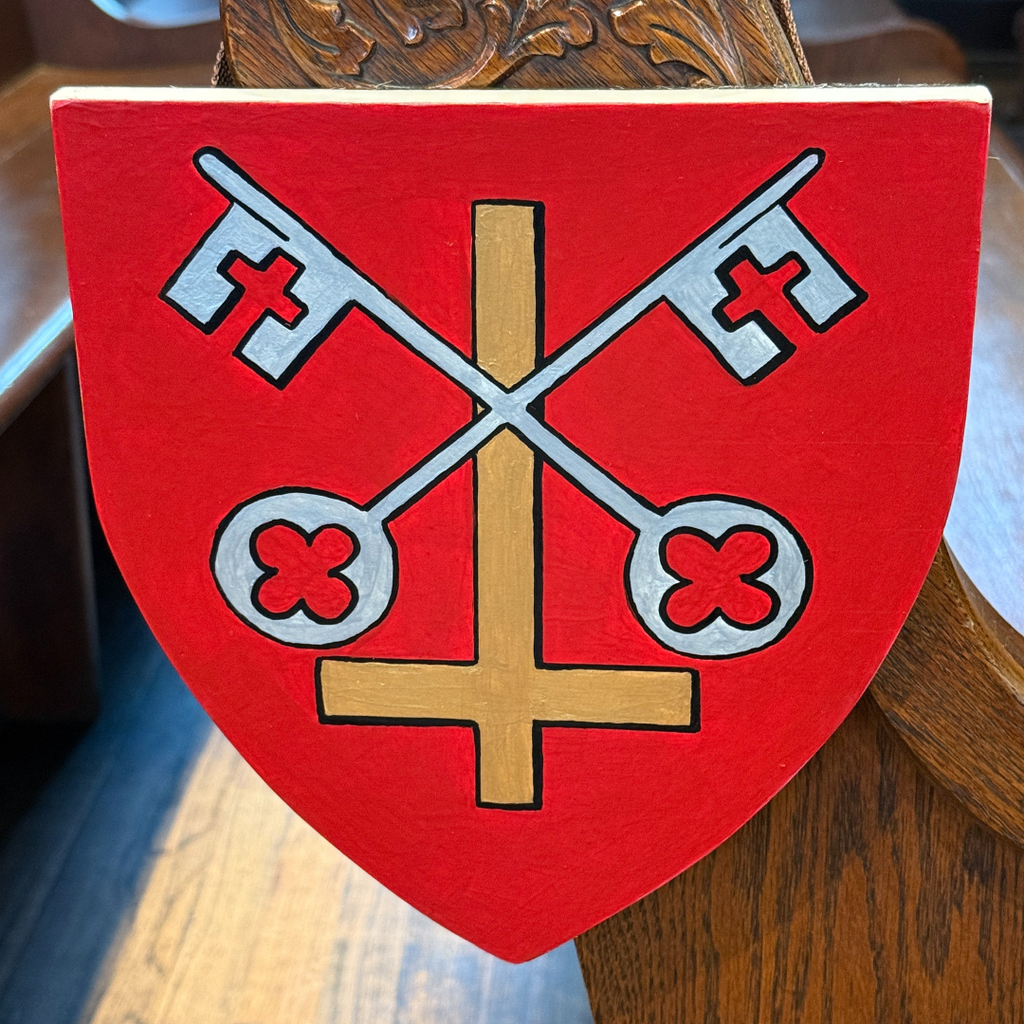
St. Peter – 1st century: Chief of the apostles, crucified upside down out of humility before his Lord. His faith, once frail yet restored, reveals the power of grace to build the Church on human weakness made strong. A gold cross and silver keys on a red field. Celebrated June 29 (shared with St. Paul).
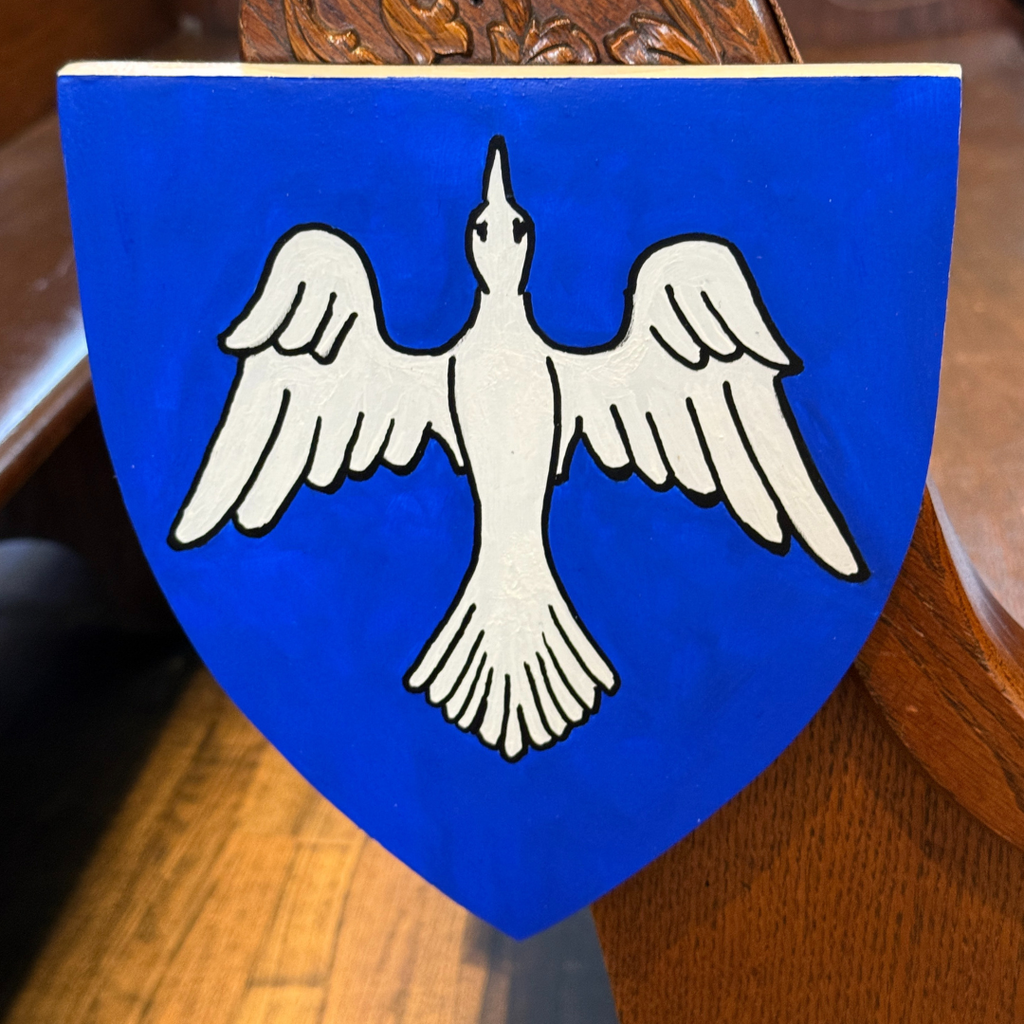
St. Scholastica – 6th century: Sister of St. Benedict and foundress of a Benedictine convent near Monte Cassino. Her vision of the dove at her death symbolizes a soul at peace, lifted into the life of God. A white dove on a blue field. Celebrated Feb. 10.
St. Thomas Aquinas – 13th century: Theologian and teacher whose Summa Theologica sought to unite faith and reason. His mind burned with the light of divine truth, showing that intellect can be an act of worship. A gold sun in splendor with the Eye, on a black field. Celebrated Jan. 28.