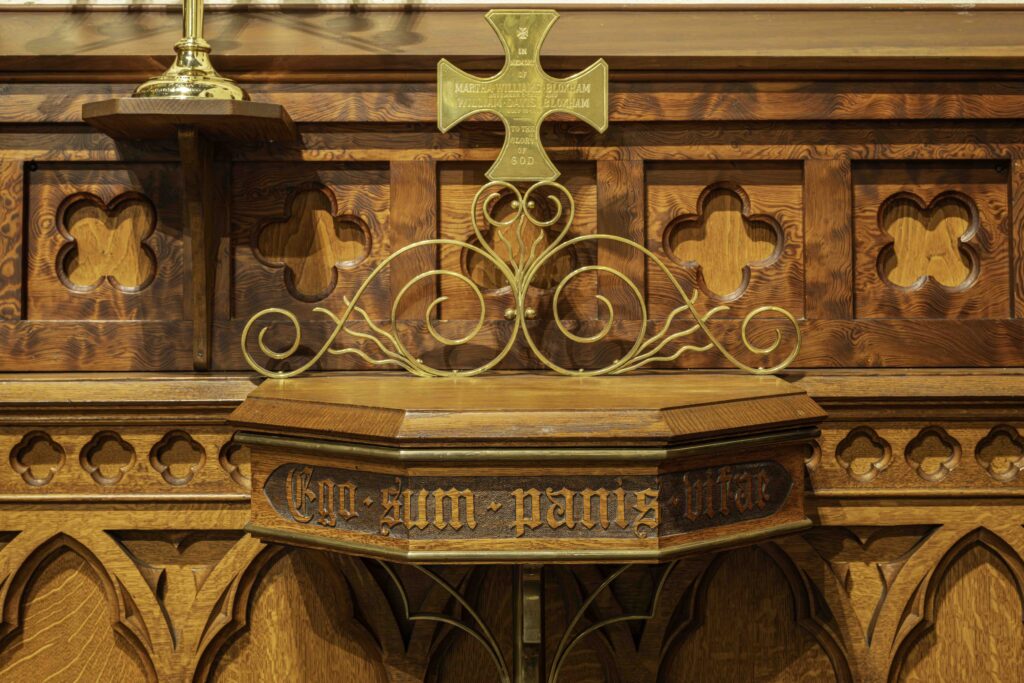
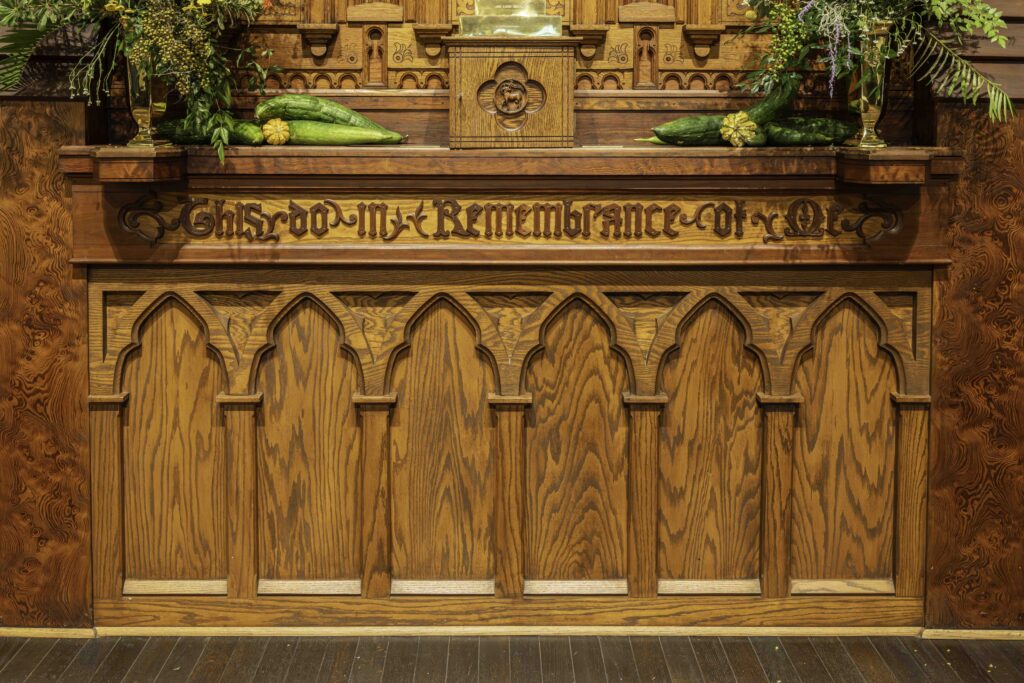
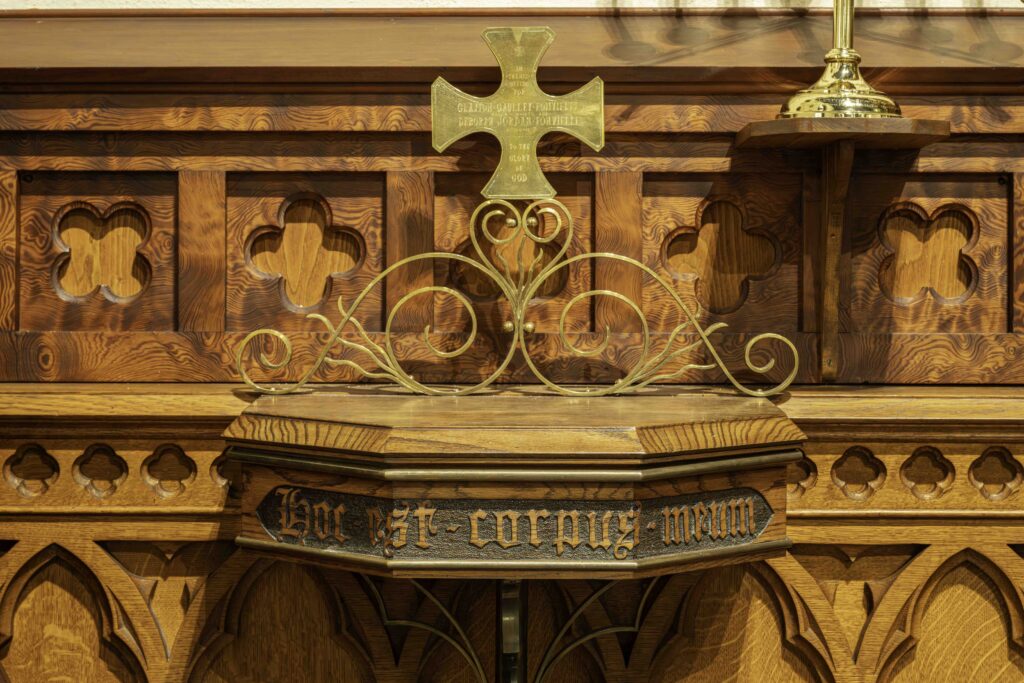
Wall & Tabernacle: The altar was originally positioned against the east wall. When it was moved to become freestanding, the wall behind it needed to be replaced and matched to the existing wall. The tabernacle sits on the wall behind the altar and holds the consecrated Eucharist. (Photos by Riko Carrion)
Did you know that when you look up at the altar every Sunday, the wall behind it was carved by one of St. John’s Episcopal Church’s parishioners? Tom Rolfes’ (1948-2025) talent and passion for woodworking became his lifelong career. Alongside his friend and partner, Mel Thomas – working together as Pelican Woodworks – they created custom cabinetry, millwork, and furniture for historic churches, boutique hotels, upscale restaurants, and fortunate homeowners. The legacy of their work can be seen through out St. John’s Episcopal Church. (Woodworking descriptions provided by Sharon Rolfes.)
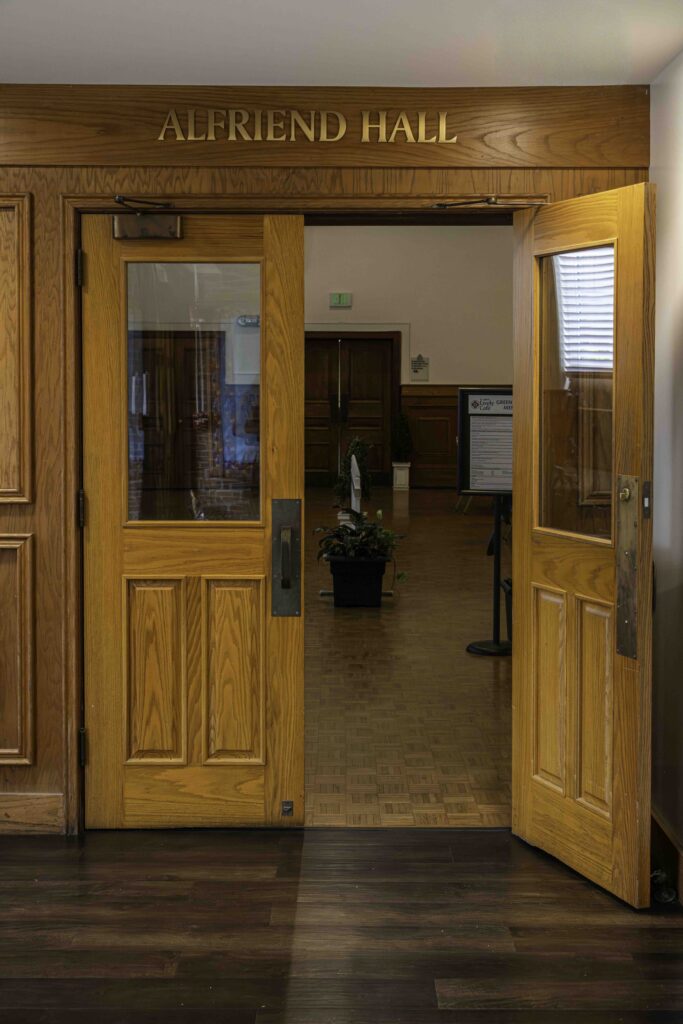
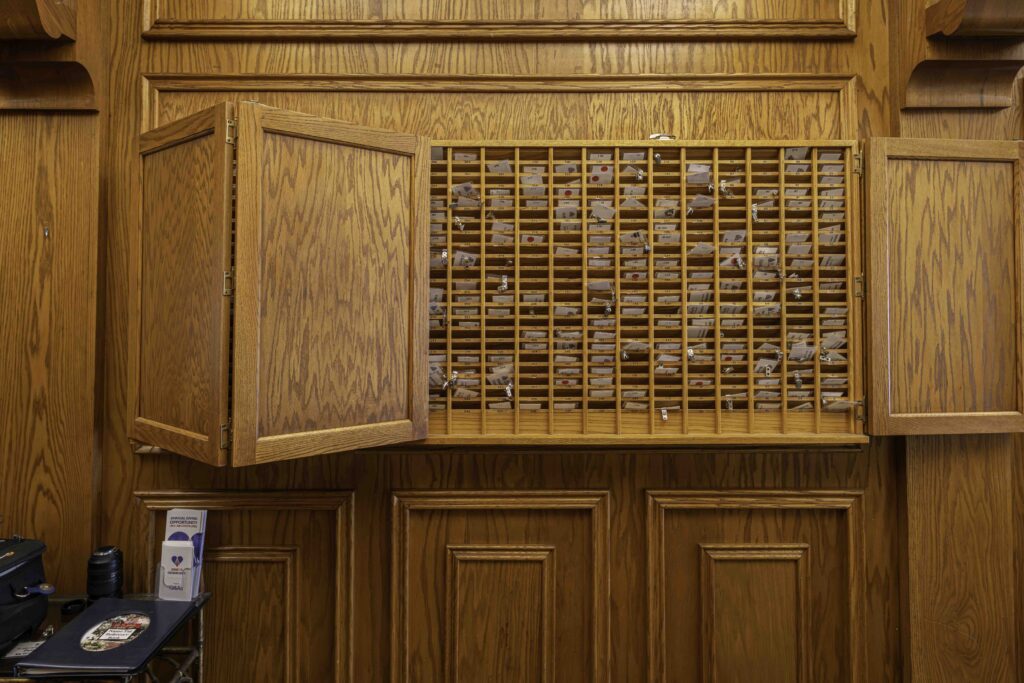
As you enter St. John’s through the Calhoun St. entrance, there are two large installations that Tom created: The Alfriend Hall Doors and the Name Tag Cabinet.
Doors: The doors entering the campus from Calhoun St., leading into Alfriend Hall. (Photos by Riko Carrion)Name Tag Cabinet: This low-profile cabinet accommodates hundreds of name tags, with folding doors that allow for a busy hallway when opened and an attractive wall when closed. (Photos by Riko Carrion)
Once you’re inside the church, take a moment to observe the Credence Table, the Sedilia, the Wall and Tabernacle (pictured above), the Choir Balcony, and the first two Pews. Tom designed, created, and installed works throughout the church, as well as discovered solutions to woodworking problems to help ease the flow of our services.
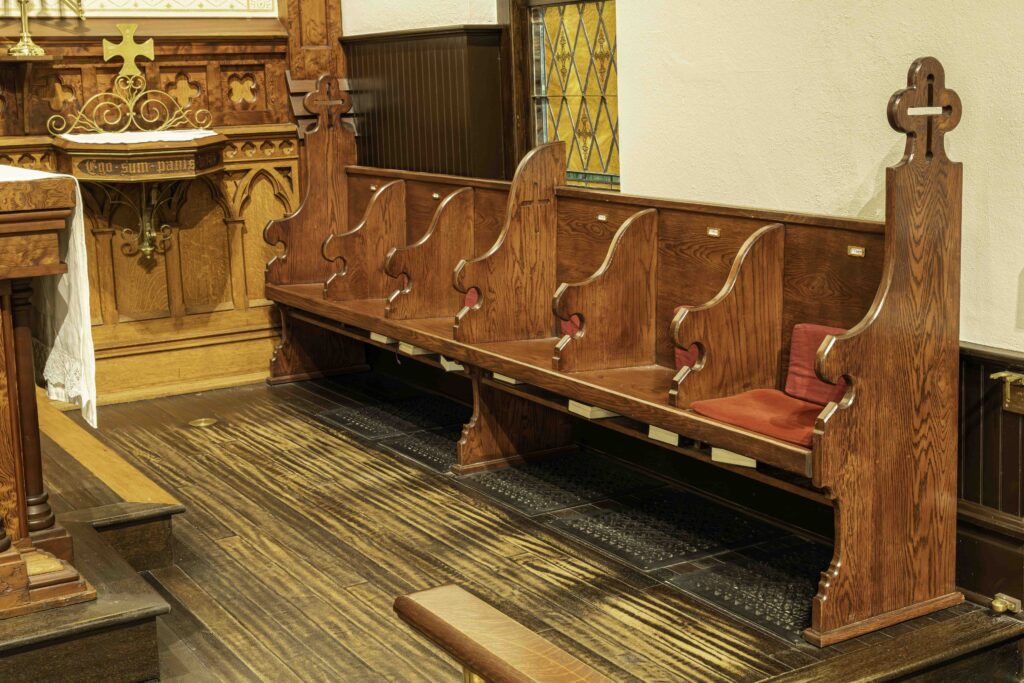
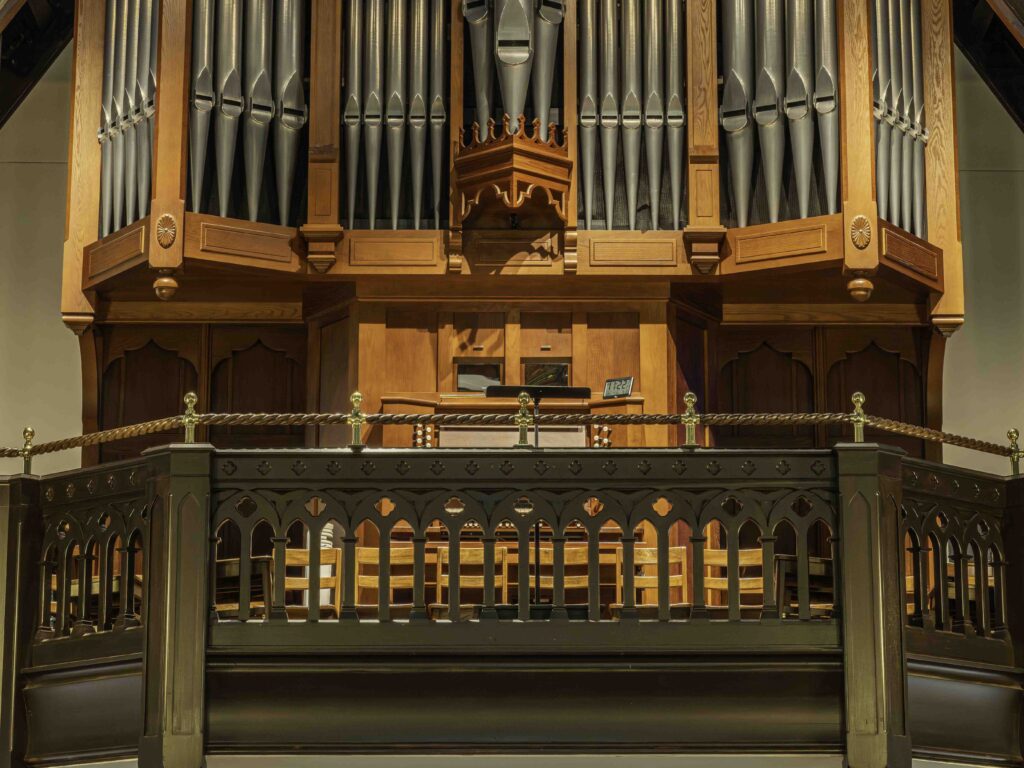
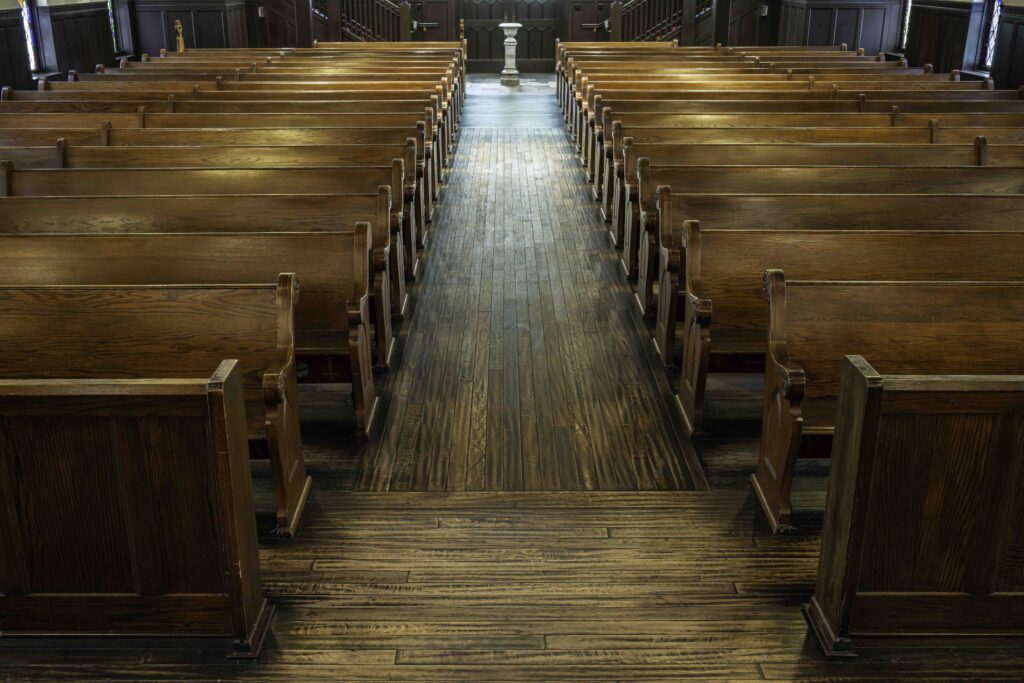
Credence Table: This credence table (left of altar) is used for items needed during the celebration of communion and was created to match the original (right of the altar). Tom found a bed in an antique store and used its old English oak to create this piece. (Photos by Riko Carrion)Sedilia: The two 6-person sedilia (benches) on each side of the altar provide seating for the clergy and were designed to match the 3-person sedilia that now sits in the south transcept. (Photos by Riko Carrion)Choir Balcony: The wood rope trim for the choir balcony rail illustrates Tom’s vision of seeing mistakes and obstacles as opportunities for creativity. The balcony wall height was approved and built for fixed seating but needed to be six inches taller when it was decided that the choir would use movable chairs instead. (Photos by Riko Carrion)Pew Modifications: The two front pews were shortened to accommodate casket maneuvering during funeral services. (Photos by Riko Carrion)
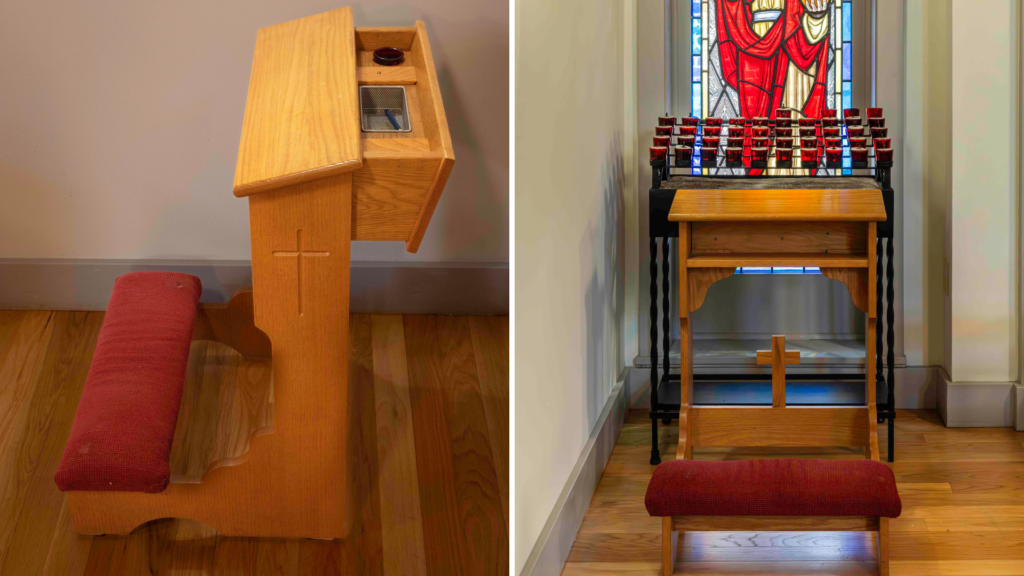
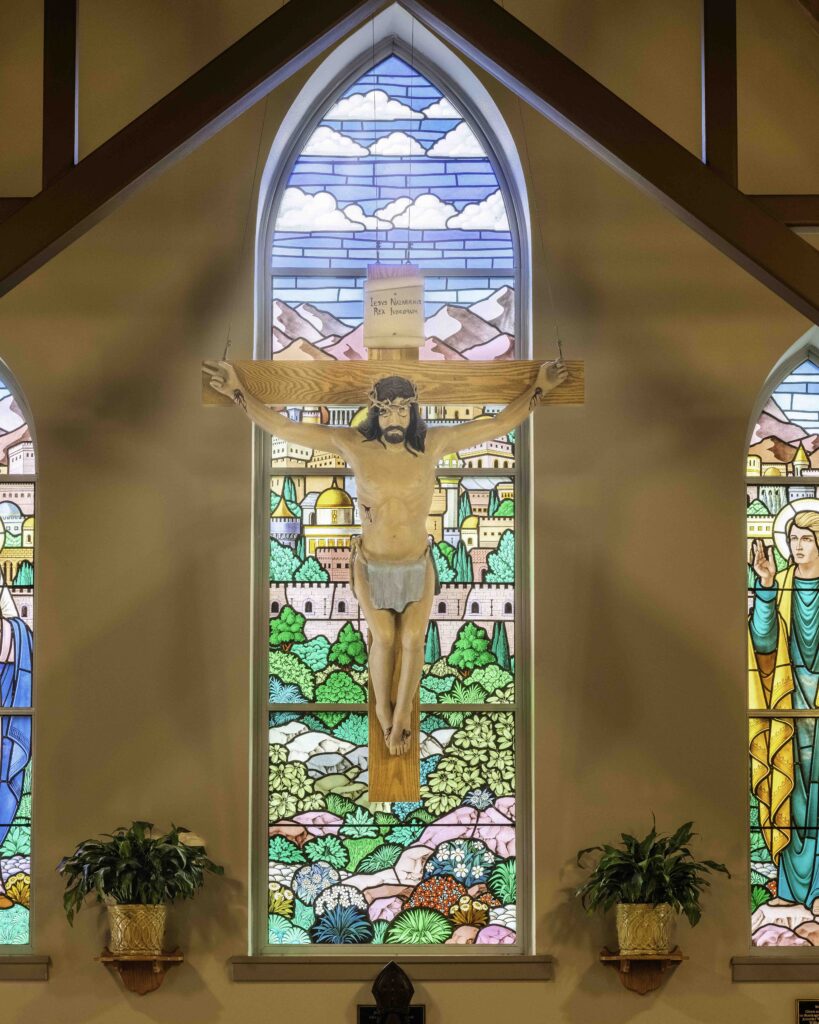
Carter Chapel also has two examples of Tom’s work, the Prayer Desk and the Crucifix.
Prayer Desk: This kneeler in Carter Chapel provides a comfortable place to say a prayer and light a candle. (Photos by Riko Carrion)Crucifix: The cross in Carter Chapel was built to accommodate the body of Christ, which was carved by another member of the church. (Photos by Riko Carrion)